How To Renew Car Registration In The UAE In 2026: Inspection, Insurance, Fees And Steps
Renewing car registration in the UAE is usually straightforward, but the process can stall if the vehicle needs an inspection, the insurance has not been updated in the traffic system, or unpaid fines are still attached to the file.
For most owners, the order is simple: complete the technical inspection if required, arrange valid motor insurance, clear outstanding fines, then renew through the licensing authority for the emirate where the car is registered. Dubai uses RTA channels, while the Ministry of Interior and local traffic authorities handle services across other emirates.
What You Need Before Renewing Car Registration In The UAE
The UAE Government lists inspection, insurance, fine settlement and payment of registration fees as the main stages of vehicle registration and renewal. Many records are exchanged electronically, so owners can complete much of the process through digital channels.
Before starting, check that you have:
- A valid Emirates ID and access to UAE Pass where required.
- Active motor insurance recorded against the vehicle.
- A valid technical inspection result if the car is due for testing.
- All renewal-blocking traffic fines or restrictions cleared.
- The vehicle plate, traffic file and registration details available.
- A bank card or other accepted payment method.
Do not leave these checks until the registration expiry date. An inspection failure or an insurance record that needs correcting can turn a quick renewal into another visit to the insurer or testing centre.
How To Renew Car Registration In The UAE In 2026
The exact digital portal depends on where the car is registered, but the practical sequence is broadly similar across the country.
1. Check Whether Your Car Needs A Technical Inspection
The UAE Government says vehicles produced within the previous three years are generally exempt from the normal inspection requirement. Dubai RTA also states that a private vehicle bought new from a local authorised dealer can be registered and renewed for its first three years without a technical inspection.
Once the exemption no longer applies, the vehicle must pass the required roadworthiness test before renewal. In Dubai, the technical inspection certificate is valid for 30 days.
A few points are worth checking before booking:
- Confirm the car’s age and whether the first-three-years exemption still applies.
- Do not assume an ownership transfer keeps the exemption in Dubai.
- Complete any obvious safety repairs before the test.
- Complete the renewal before the inspection certificate expires.
Dubai RTA says a change of ownership requires a technical inspection even during the vehicle’s first three years.
2. Arrange Valid UAE Motor Insurance
The traffic system must show valid insurance before the registration can be renewed. In Dubai, RTA verifies the insurance electronically during the renewal transaction.
If you are changing insurers, make sure the correct policy has been registered against the vehicle. If the new policy does not appear in the renewal system, contact the insurer before trying to complete the transaction.
Insurance is also one of the largest variables in the annual renewal bill. The premium depends on the vehicle, insured value, cover type, driver profile, claims history and insurer, so there is no single total renewal cost that applies to every UAE owner.
3. Clear Fines And Any File Restrictions
Traffic fines should be checked before attempting the final transaction. The UAE Government includes settlement of fines in the registration process, while Dubai RTA instructs owners to clear relevant vehicle fines before renewal.
Checking early is particularly useful if the car has recently changed ownership, has an unresolved plate issue or has remained unregistered for an extended period.
4. Complete The Renewal Through The Correct Authority
Dubai-registered vehicles can be renewed through RTA digital channels, including the RTA website, RTA Dubai app and Dubai Now, along with supported self-service machines and vehicle registration centres.
For vehicles registered elsewhere, the UAE Government lists channels including:
- Ministry of Interior website and app.
- Emirates Vehicle Gate.
- Relevant emirate traffic departments.
- Abu Dhabi Police vehicle services.
- Approved registration and inspection centres.
The system normally checks the vehicle’s insurance and inspection status before calculating the payable amount and completing the renewal.
How Much Does UAE Car Registration Renewal Cost In 2026?

There is no single final amount for every UAE owner because the bill can include registration, inspection, insurance, fines, re-testing and optional delivery. Vehicle category and emirate also affect the amount.
For a private light vehicle in Dubai, RTA lists the following core charges:
- Vehicle ownership renewal: AED 350.
- Knowledge and Innovation fees on renewal: AED 20.
- Standard light-vehicle technical inspection: AED 150.
- Knowledge and Innovation fees on inspection: AED 20.
- Light-vehicle re-inspection, if required: AED 50.
- Optional standard document delivery: AED 20.
These figures mean a Dubai private light vehicle requiring the standard inspection has core renewal and testing charges of about AED 540 before insurance, fines, re-testing or optional delivery.
Owners in Abu Dhabi, Sharjah, Ajman, Ras Al Khaimah, Fujairah and Umm Al Quwain should check the live fee shown by the relevant authority before payment, particularly for vehicles outside the standard private light-car category.
What Happens During The UAE Vehicle Inspection?
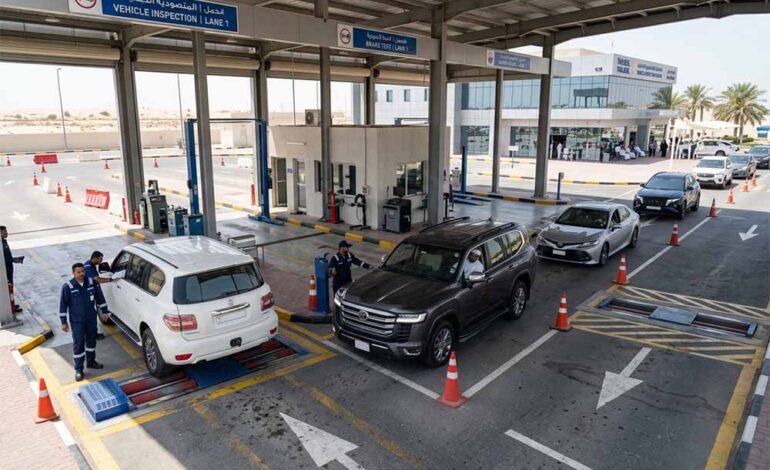
The technical inspection is designed to establish whether the vehicle meets the required roadworthiness standard for registration. RTA provides approved inspection centres in Dubai, while ADNOC Distribution operates authorised Vehicle Inspection Centres in Abu Dhabi and several northern emirates.
If a vehicle fails, the required repairs must be completed before it returns for testing. ADNOC Distribution confirms that vehicles failing its inspection must be repaired before being presented again.
Tyres Deserve Attention Before The Test
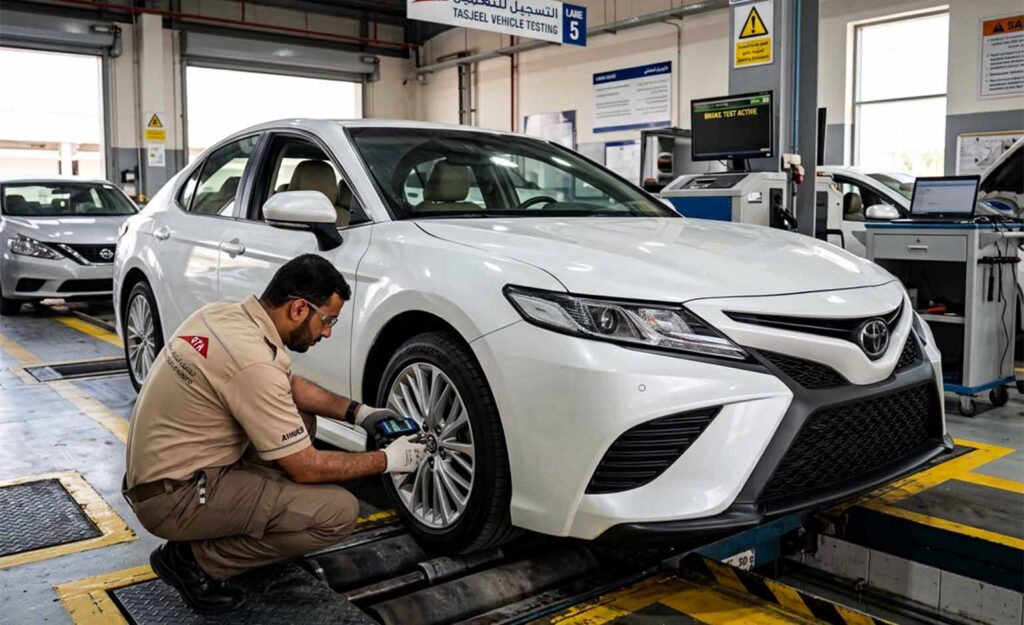
Tyres matter particularly in UAE conditions because extreme summer temperatures and long motorway journeys can expose ageing or damaged rubber.
Dubai RTA states that tyres are valid for a maximum of five years from their manufacturing date. Damaged tyres must also be replaced if the vehicle is to pass its technical inspection.
Before testing, it makes sense to check:
- Tyre age, cracking, cuts and abnormal tread wear.
- Tyre pressure and any obvious loss of air.
- Exterior lights, indicators and brake lights.
- Wipers, washer operation and windscreen condition.
- Warning lights or visible mechanical faults.
A workshop check may be worthwhile for an older vehicle, particularly one that has been parked for several months or has developed tyre, steering or braking problems.
The 30-Day Grace Period Should Not Become Your Renewal Plan
Dubai RTA states that vehicle registration is valid for a maximum of 12 months, followed by a 30-day grace period for renewal. Late-renewal charges can apply depending on the vehicle and length of delay.
RTA also says a Dubai traffic file can be blocked if an expired vehicle registration is not renewed within two months of expiry.
Treat the grace period as a buffer rather than your planned renewal date. Renewing before expiry gives you more time to deal with an unexpected inspection failure, insurance issue or traffic-file problem.
Dubai owners can renew a vehicle up to 150 days before expiry. However, RTA states that when renewal is completed before the existing licence expires, the new validity is calculated from the application date.
Renewing unusually early may therefore mean giving up part of the remaining registration period.
Dubai, Abu Dhabi And The Northern Emirates Use Different Renewal Channels
The purpose of registration renewal is broadly the same across the UAE, but owners should follow the process associated with the emirate in which their vehicle is registered.
Dubai
Dubai owners mainly deal with RTA and approved testing centres. Once the vehicle’s insurance and inspection information is available electronically, eligible customers can complete the remaining transaction online.
Useful Dubai points include:
- Eligible new private cars can avoid testing during the first three years.
- Inspection becomes necessary once the exemption ends.
- A Dubai inspection certificate is valid for 30 days.
- Digital ownership and several printing or delivery options are available.
RTA also states that a vehicle registered in another emirate cannot simply be renewed through Dubai’s licensing authority when it belongs under another emirate’s traffic system.
Abu Dhabi
Vehicle inspections in Abu Dhabi are widely available through ADNOC Distribution Vehicle Inspection Centres. ADNOC says its authorised centres provide inspection services required for vehicle registration and renewal.
Its inspection network also covers Al Ain and Al Dhafra, giving owners several options before completing the relevant licensing transaction.
Sharjah And The Other Northern Emirates
The Ministry of Interior provides digital vehicle registration renewal services used across several emirates, while local police departments and approved inspection providers may offer additional channels.
Start with the authority linked to your vehicle’s plate and traffic file rather than assuming the procedure is identical to Dubai.
Common Registration Renewal Mistakes That Cost Owners Time

Most renewal delays are not caused by major mechanical problems. Small administrative issues or maintenance items discovered at the last moment can be enough to stop the transaction.
Avoid these common mistakes:
- Buying insurance without checking that it is linked to the correct vehicle.
- Arriving for inspection with damaged or over-age tyres.
- Assuming every car under three years old remains inspection-exempt after a transfer.
- Waiting until the last day to check fines or traffic-file restrictions.
- Allowing a passed inspection certificate to expire before renewal.
- Renewing very early in Dubai without checking the new validity date.
- Trying to renew through the wrong emirate’s licensing authority.
For an older UAE car, spending a little time checking tyres, lights and basic mechanical condition before inspection can be more useful than simply arriving at the test centre and hoping it passes.
What If The Car Is Outside The UAE When Registration Is Due?
Owners with a vehicle outside the country need to plan earlier. Dubai RTA provides a process for recognising technical inspection certificates issued abroad, although supporting documents may need official ratification depending on where the certificate was issued.
RTA states that certificates can be rejected once they exceed their legal validity period. Documentation requirements also differ for GCC nationals and certificates issued outside GCC countries.
If your car is abroad close to its registration expiry date, check the issuing emirate’s requirements before arranging an overseas inspection. Do not assume a foreign roadworthiness certificate will automatically be accepted.
A Smoother UAE Renewal Starts Before The Expiry Reminder
Car registration renewal in the UAE is easiest when four essentials are ready before you open the app: inspection where required, valid insurance, a clear traffic file and the correct payment details.
For vehicles beyond the new-car inspection exemption, renewal is also a useful annual checkpoint. UAE heat, motorway driving and long periods of parking can be demanding on tyres and other wear items, making a basic pre-inspection check worthwhile.
If you are unsure about a fee or testing requirement, use the live service page for the emirate where the vehicle is registered. Service channels, optional charges and individual requirements can change, so the plate-issuing authority should be the final reference before payment.