OMODA & JAECOO AI Parking Technology Could Make Everyday Driving Easier in Saudi Arabia
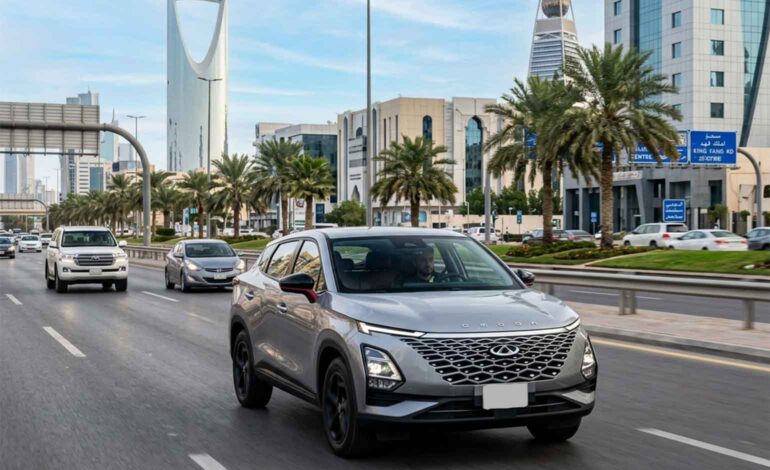
Parking is one of those small daily jobs that can become disproportionately irritating in Saudi cities. Busy mall car parks, narrow basement ramps, tightly marked bays and the walk back to a vehicle in peak summer heat all add friction to an otherwise simple journey. OMODA & JAECOO is now pushing a new answer to that problem with its Super Intelligent Valet Parking system, or SIVP.
The OMODA & JAECOO AI parking technology is designed to do more than steer into a space. In the brand’s latest Saudi-focused communications, SIVP can recognise parking spaces, plan a route, respond to obstacles and carry out parking manoeuvres under defined operating conditions. Earlier global demonstrations of the brand’s valet-parking technology also showed remote vehicle summon and automated parking functions.
For Saudi drivers, the appeal is easy to understand. A system that can reduce time spent searching for a space, squeezing into a narrow bay or walking across a large car park in extreme heat could be genuinely useful. The important point for buyers, however, is that final Saudi model availability, specifications, supported locations and pricing have not been fully confirmed in the sources reviewed.
What OMODA & JAECOO’s SIVP actually does
OMODA & JAECOO has used different terminology during 2026. Earlier global testing referred to VPD, or Valet Parking Driver, while more recent Saudi and regional communications use SIVP, meaning Super Intelligent Valet Parking. The capabilities described include low-speed route planning, parking-space recognition, obstacle avoidance, automated parking and remote vehicle summon.
A regional description of SIVP says the system uses a 27-sensor perception suite including LiDAR, cameras, millimetre-wave radar and ultrasonic sensors. These inputs help the vehicle understand what is around it while its control systems handle the low-speed manoeuvre.
That is more ambitious than simply adding parking sensors or a 360-degree camera. The useful part is not the AI label itself, but the ability to recognise the surrounding environment, plan a path and control the vehicle through more of the parking process.
Why OMODA & JAECOO AI parking technology fits Saudi driving
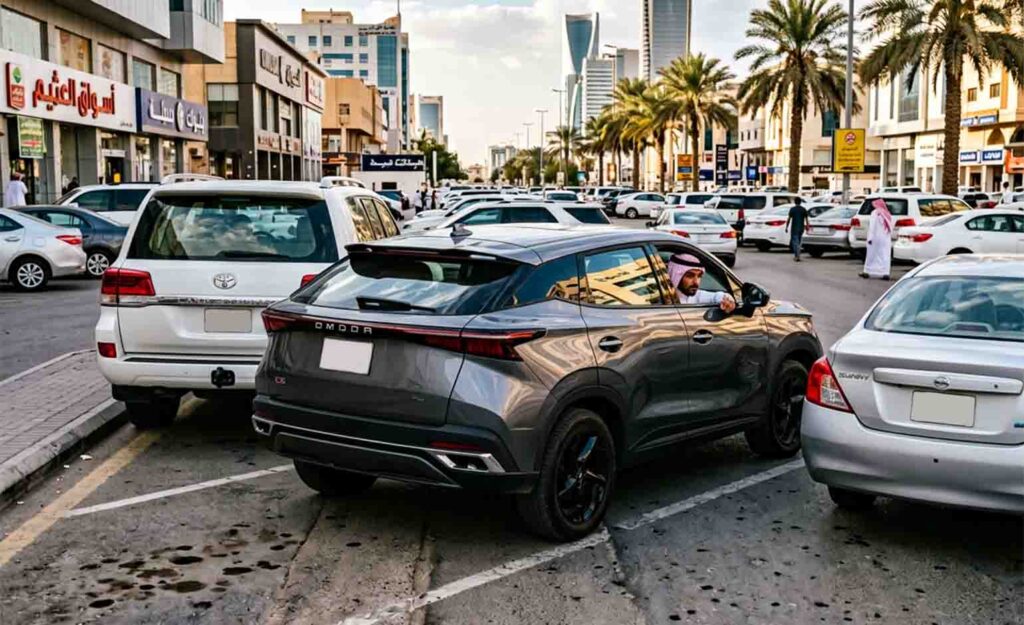
Saudi Arabia is a logical market for this type of feature because parking convenience is closely connected to both urban driving and climate. Recent Saudi communications from the brand specifically point to cities including Riyadh, Jeddah and Dammam, along with shopping centres, commercial districts and lifestyle destinations, as environments where intelligent parking assistance could be useful.
Three situations stand out in everyday use:
- Busy shopping centres and mixed-use developments could be where SIVP earns its keep most often. Instead of repeatedly searching for a bay and then making several steering corrections to get into it, the technology is intended to recognise suitable parking spaces and complete the manoeuvre under supported conditions. The benefit is less about showing off new technology and more about removing a repetitive job from a normal family or commuting journey.
- Tight basement spaces could also favour a system with a wider view of its surroundings. Pillars, neighbouring cars, awkward corners and limited turning space can make underground parking uncomfortable even for experienced drivers. A properly functioning automated system may reduce some of that workload, although the driver still needs to monitor what is happening.
- Remote summon may be the feature Saudi drivers notice most during hotter months. OMODA & JAECOO’s demonstrations show users calling the vehicle towards a designated collection point through a mobile application. That could reduce the distance someone needs to walk through a large parking area, but Saudi buyers should first confirm where the function is locally enabled.
The technology goes beyond ordinary auto-park
Finding the bay, not just steering into it
Many familiar parking-assistance systems concentrate mainly on the final manoeuvre after the driver has already located a space. OMODA & JAECOO’s valet-parking concept is designed to handle a wider part of the process, including travelling through a supported parking environment, identifying a suitable bay and carrying out the parking operation.
That wider scope is what could make the technology more noticeable in daily use. Having the steering wheel turn automatically is useful, but reducing the searching, positioning and repeated low-speed corrections is potentially much more valuable in a crowded car park.
Remote summon could have particular value in Saudi Arabia
The brand’s global tests have placed considerable emphasis on vehicle summon. During demonstrations, the user could request the vehicle through a mobile application and have it move from its parking position towards a designated collection point while responding to obstacles within the operating environment.
For Saudi owners, that could be useful at shopping centres, offices, hotels and large residential developments, particularly when outside temperatures make a long walk back to the vehicle uncomfortable. It may also appeal to families carrying shopping or travelling with young children, provided the collection point and parking facility support the feature.
Defined operating conditions matter
SIVP should not be confused with unrestricted autonomous driving. OMODA & JAECOO’s own safety guidance for its VPD demonstrations states that the valet-parking function is a driver-assistance feature intended for enclosed private parking facilities, not public roads. The user is also expected to remain aware of the surroundings and ready to take control.
That limitation is worth remembering. A Saudi owner should not assume the car can be summoned along a public street, across every hotel forecourt or through any open parking area simply because the mobile application includes a summon function.
What Saudi buyers should verify before paying extra
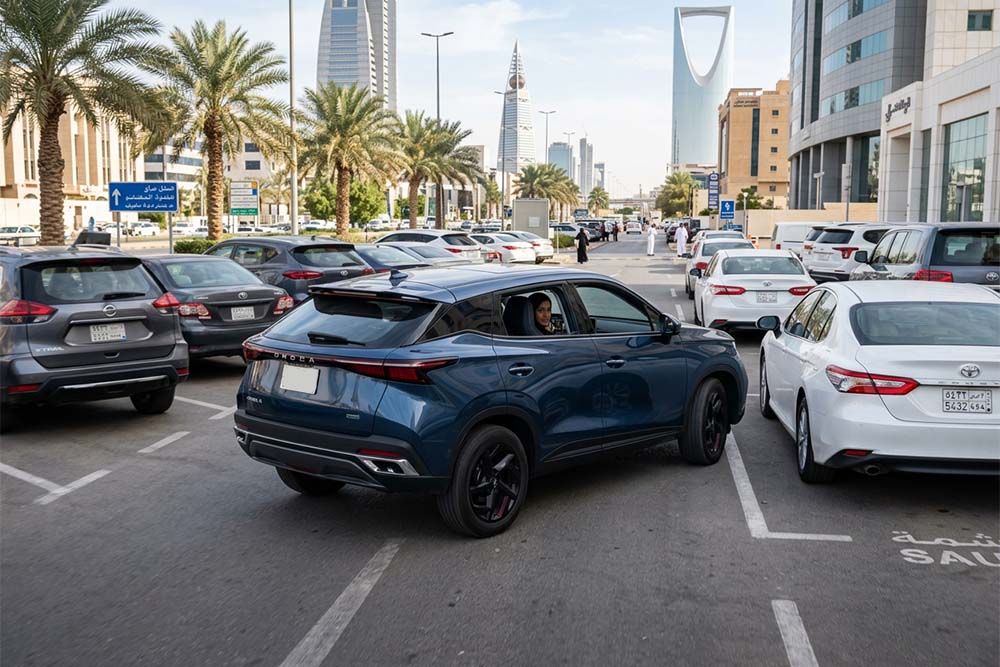
The technology sounds useful, but the purchase decision should be based on the Saudi specification sheet rather than a global demonstration. OMODA & JAECOO’s Saudi website currently publishes its local models and after-sales information, while recent Saudi reports describe SIVP as technology being advanced for the Kingdom. Based on the sources reviewed, there is not yet a confirmed Saudi SIVP price, complete trim list or detailed roll-out timetable.
Before ordering a vehicle specifically because of its parking technology, buyers should get clear answers to these points:
- Check the exact model, trim and software specification. The JAECOO J7 SHS has featured in global demonstrations, but that does not mean every Saudi J7, J7 SHS or future OMODA model will receive identical hardware and functionality. Ask whether SIVP is standard equipment, an optional package or a feature limited to selected versions.
- Ask where the system can actually be used. Brand material repeatedly refers to supported or defined parking environments, so the practical value will depend on the conditions under which Saudi vehicles are allowed to activate it. Ask whether specific parking facilities, mobile connectivity or other local requirements apply before assuming the feature will work at every destination.
- Understand what the driver must do while the vehicle is moving. The manufacturer describes the technology as driver assistance rather than unrestricted autonomous driving. The handover should explain how to stop the manoeuvre, what happens when a pedestrian or another vehicle blocks the route, and how the user takes control if conditions change.
Ownership realities in Gulf heat, dust and crowded car parks
Advanced parking technology also brings more hardware into parts of the car that face dust, road grime and occasional low-speed knocks. The regional SIVP description refers to cameras, LiDAR, radar and ultrasonic sensors, so the system depends heavily on those components being able to read their surroundings correctly.
Saudi owners should keep three practical ownership points in mind:
- Keep cameras and sensor areas clean. Dust and road dirt can collect quickly around bumpers, grilles and external cameras, particularly after highway journeys or dusty conditions. If the vehicle reports that an assisted-parking function is unavailable, check whether the relevant sensor areas need cleaning before assuming there is a mechanical fault.
- Ask about calibration after accident or body repairs. A replaced bumper, grille, mirror, camera mount or other sensor-related component may need checking before all assistance systems operate correctly again. Before approving repairs, ask the authorised service centre whether SIVP-related calibration is required and ask the insurer how that work will be handled as part of the claim.
- Read the warranty terms for the technology itself. OMODA & JAECOO Saudi Arabia currently advertises a six-year or 250,000 km comprehensive vehicle warranty, while its detailed terms separately list an “electronic parking controller assembly” with coverage of 36 months or 60,000 km. That does not confirm the coverage applied to every future SIVP component, so buyers should ask specifically about cameras, sensors, controllers and associated hardware.
Software support should also be part of the conversation. If an intelligent parking function relies on applications, vehicle software and compatible infrastructure, buyers should understand how updates are delivered and whether continued access to every function requires an active account or other service. No Saudi-specific subscription arrangement for SIVP was confirmed in the sources reviewed.
Could SIVP affect resale value in Saudi Arabia?
A genuinely useful parking feature could help a well-equipped vehicle stand out in the used market, particularly if Saudi owners become familiar with the system and it continues receiving software and parts support. There is not yet reliable Saudi resale data showing that SIVP adds a measurable amount to the value of a used OMODA or JAECOO, however.
Long-term desirability will depend on whether the feature remains active for the next owner, whether any associated account or service can be transferred and how easily sensors and controllers can be maintained.
A five-year-old SUV with a properly functioning advanced parking system is likely to make a better impression than one showing sensor warnings or disabled assistance functions. For that reason, service history and evidence of correct accident repairs could become particularly relevant on cars fitted with more sophisticated parking hardware.
Saudi availability is the part buyers should watch
The latest Saudi-focused report reviewed, published on 16 August 2026, says OMODA & JAECOO is advancing SIVP as part of its intelligent mobility plans for Saudi drivers. An earlier Saudi announcement in June also said the company intended to progressively introduce more AI-powered mobility technologies in the Kingdom.
What remains unconfirmed is just as important. The sources reviewed do not provide a final Saudi retail price for SIVP, a definitive list of locally equipped models and trims, or a comprehensive schedule for compatible parking facilities.
The August Saudi update also discusses the upcoming OMODA 4 and says its Saudi launch timing, specification and market availability will be announced closer to launch. Buyers therefore should not assume that every AI-related product announcement from OMODA & JAECOO represents a feature that can already be ordered locally.
For Saudi buyers, usefulness matters more than the AI badge
OMODA & JAECOO’s parking technology addresses a recognisable Gulf driving annoyance rather than an abstract technology problem. If SIVP can reliably find spaces, park in tight areas and summon a vehicle inside supported Saudi facilities, it could make shopping trips, office parking and hot-weather vehicle collection noticeably easier.
The buying decision should still come down to local execution. Confirm the Saudi model and trim, ask exactly where the system works, understand the driver’s responsibility, check warranty coverage for the hardware and find out what happens after a sensor repair.
If those answers are clear, OMODA & JAECOO AI parking technology could become one of the more useful convenience features on a Gulf-market SUV rather than something that looks impressive in a demonstration but sees little use during everyday ownership.