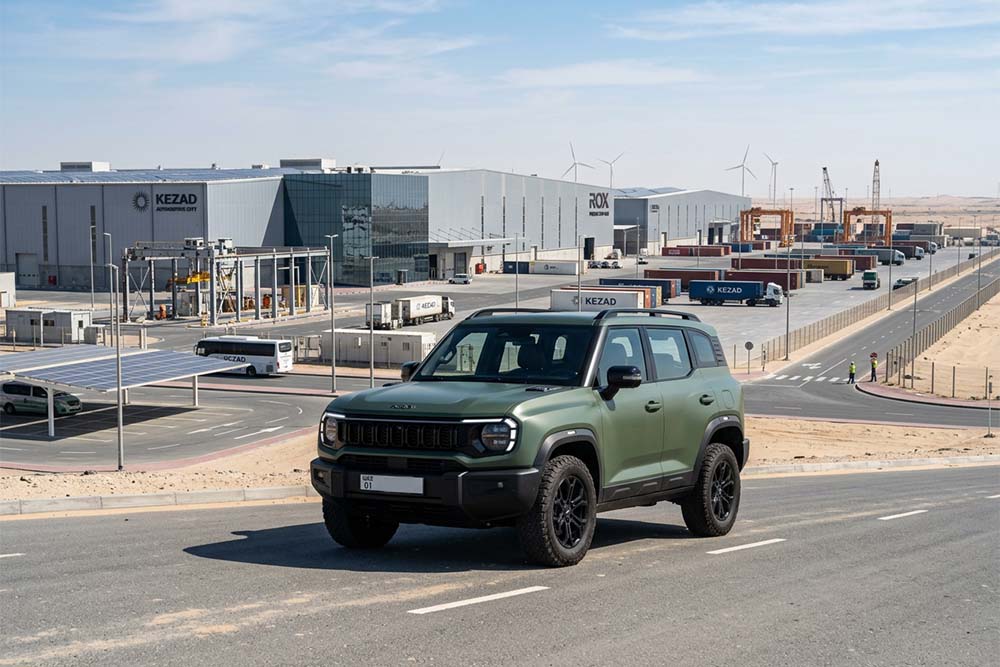
Dubai RTA Mobile Vehicle Inspection Service Brings On-Site Testing Across the UAE
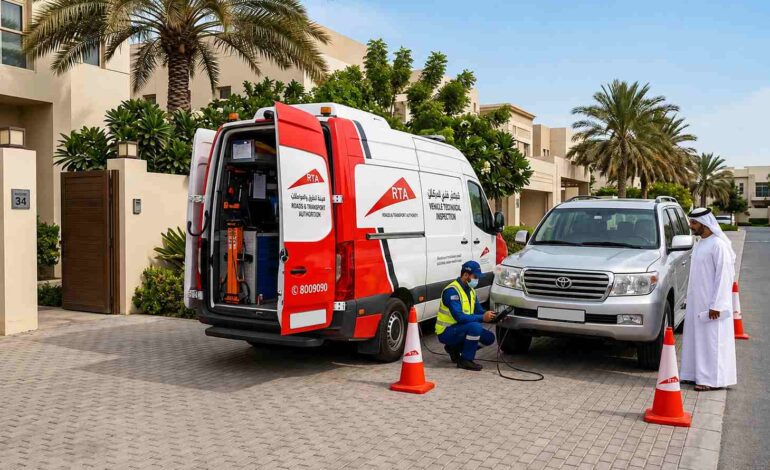
Dubai’s Roads and Transport Authority has expanded the way motorists and businesses can handle technical vehicle testing with
Aber, an on-site inspection service designed to bring an RTA-approved testing unit directly to the customer.
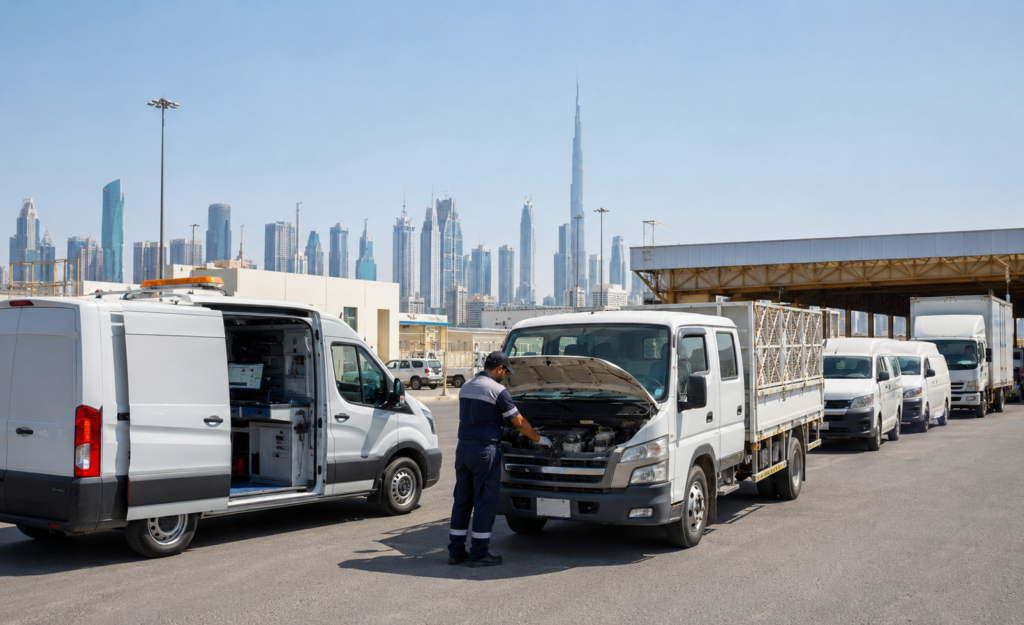
Launched in June 2026, the Dubai RTA mobile vehicle inspection service allows eligible inspections to be carried out at homes, workplaces and fleet locations rather than requiring every vehicle to be driven to a conventional testing centre. Regional reports on the launch state that Aber is available across the UAE, giving the service relevance well beyond Dubai’s individual car owners.
The service covers light and heavy vehicles and sits alongside RTA’s existing network of vehicle testing centres. For private motorists, the main attraction is convenience. For fleet operators, logistics companies and businesses running multiple vehicles, the potential saving in vehicle downtime could be more significant.
There is a price premium, however. RTA’s current fee schedule lists a total of AED 370 for a light vehicle using mobile technical inspection, compared with AED 170 for the corresponding standard technical inspection at a testing centre. Heavy vehicle mobile inspection is listed at AED 520.
What exactly is the new RTA mobile vehicle inspection service?
Aber essentially turns part of the conventional RTA testing-centre process into an on-location service.
RTA’s official vehicle inspection information states that customers unable to bring a vehicle to a Vehicle Registration and Inspection Centre can request Mobile Technical Inspection for light and heavy vehicles. A fully equipped inspection vehicle is then sent to the customer’s location, where the vehicle is checked according to RTA-approved technical standards.
The RTA currently lists several providers capable of arranging mobile technical inspections, including Tasjeel ENOC, Wasel Vehicle Testing, Al Mutakamela Center and Aber Registration Vehicle Testing Centre.
The June 2026 Aber rollout broadens the appeal of that model by presenting mobile inspection as an on-demand option for motorists and businesses across the UAE. According to the launch information, customers select where the inspection should take place, the preferred date and the number of vehicles requiring testing.
That makes it particularly relevant in a country where vehicle ownership ranges from single family cars and high-mileage commuter SUVs to large commercial fleets, delivery vans, trucks and specialised equipment.
Which inspections can Aber carry out?
Aber is not simply a pre-purchase inspection service offered by a private workshop. The service is intended for official technical inspection procedures connected with vehicle licensing and registration requirements.
The announced vehicle services include several common transactions.
- Registration renewal inspections: Vehicles that require a technical test as part of the renewal process can be inspected at the selected location. The result is handled through the official testing system rather than functioning as an informal mechanical health check.
- Vehicle transfer inspections: Aber can support inspections linked with transferring a vehicle, which could be particularly useful for used-car transactions or businesses disposing of fleet vehicles. Owners should still confirm the exact documentation and licensing steps required for their particular transaction.
- Export inspections and vehicle data checks: Export testing and inspections connected with updating vehicle information are also included among the announced services. Requirements can vary depending on the vehicle and transaction, so motorists should check the current RTA conditions before booking.
RTA’s broader technical inspection system remains responsible for verifying whether vehicles meet the required roadworthiness and safety standards for the relevant licensing procedure. Its standard Vehicle Technical Inspection Certificate is valid for 30 days.
How booking the Dubai RTA mobile vehicle inspection service works
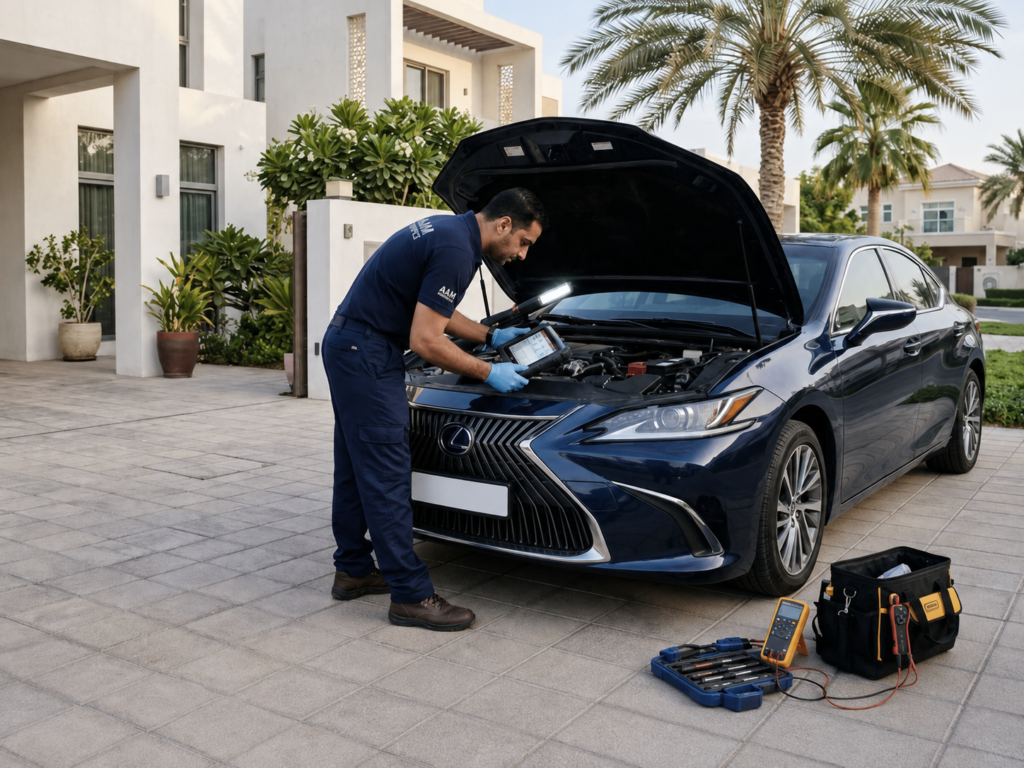
The process is designed around arranging the inspection before the vehicle moves anywhere.
According to the Aber launch details, customers choose their required location, test date and the number of vehicles to be inspected through the available booking channels. Mobile units are equipped for technical inspections and staffed by RTA-certified inspectors. Up to nine vehicles can reportedly be included in a single visit under the announced service arrangement.
Documents private motorists should have ready
The exact paperwork depends on the inspection and vehicle, but the documents identified at launch include an original Emirates ID and the vehicle registration card, commonly referred to as the Mulkiya.
Valid vehicle insurance may also be required where applicable. Owners should avoid assuming that booking the mobile unit automatically completes every part of registration renewal, particularly if insurance, fines, ownership records or another licensing requirement still needs attention.
Company and commercial vehicle requirements
Businesses may need to provide a valid trade licence in addition to the vehicle documentation. Advertisement permits can also be relevant for vehicles carrying commercial advertising, while additional documents may be requested depending on the vehicle class or inspection category.
This is where the service potentially becomes more valuable than it is for a single private car. Sending a testing unit to a depot can reduce the need to dispatch multiple company vehicles individually to inspection centres.
The inspection result still follows RTA standards
Mobile testing does not mean relaxed testing requirements. RTA says the vehicle sent for mobile inspection is assessed according to its approved technical standards.
Vehicles must continue to meet the relevant validity and general safety conditions. Special vehicles, including those with modified bodies or certain unusual characteristics, may require additional review by RTA’s Technical Inspection Committee rather than being handled entirely through a straightforward mobile visit.
AED 370 for a light vehicle: how the mobile inspection price works
Convenience carries an additional cost.
RTA’s current published fee structure shows a standard light vehicle technical inspection fee of AED 150 plus AED 20 in Knowledge and Innovation fees, making AED 170 in total. When Mobile Technical Inspection is selected, an additional AED 200 mobile service charge takes the total to AED 370.
For a heavy vehicle, RTA lists AED 200 for technical inspection, AED 300 for Mobile Technical Inspection and AED 20 in Knowledge and Innovation fees, producing a total of AED 520.
The practical comparison is therefore straightforward:
- A private light-vehicle owner pays for convenience: At the listed rates, mobile inspection adds AED 200 to the normal light-vehicle inspection cost. Someone living close to an RTA testing centre may still find a conventional appointment the more economical choice.
- Businesses need to calculate downtime as well as the inspection fee: For a company with vans, trucks or operational vehicles, the additional fee has to be compared with fuel, driver time and the hours lost moving vehicles between a worksite and a testing centre. The economics could look very different for a fleet than for one privately owned saloon or SUV.
- Extra transactions can still affect the total bill: Reinspection, export procedures and other vehicle-specific services can carry separate fees. Motorists should therefore treat AED 370 as the published mobile light-vehicle inspection total for the applicable category, not as a universal fixed price covering every possible licensing transaction.
Launch reporting also identified additional Aber services with separate pricing, including machinery and equipment inspection starting from AED 190 and certain food transport vehicle services starting from AED 225. These are different service categories and should not be confused with the AED 370 mobile technical inspection price for a light vehicle.
Why mobile testing could matter more to UAE fleets than private cars
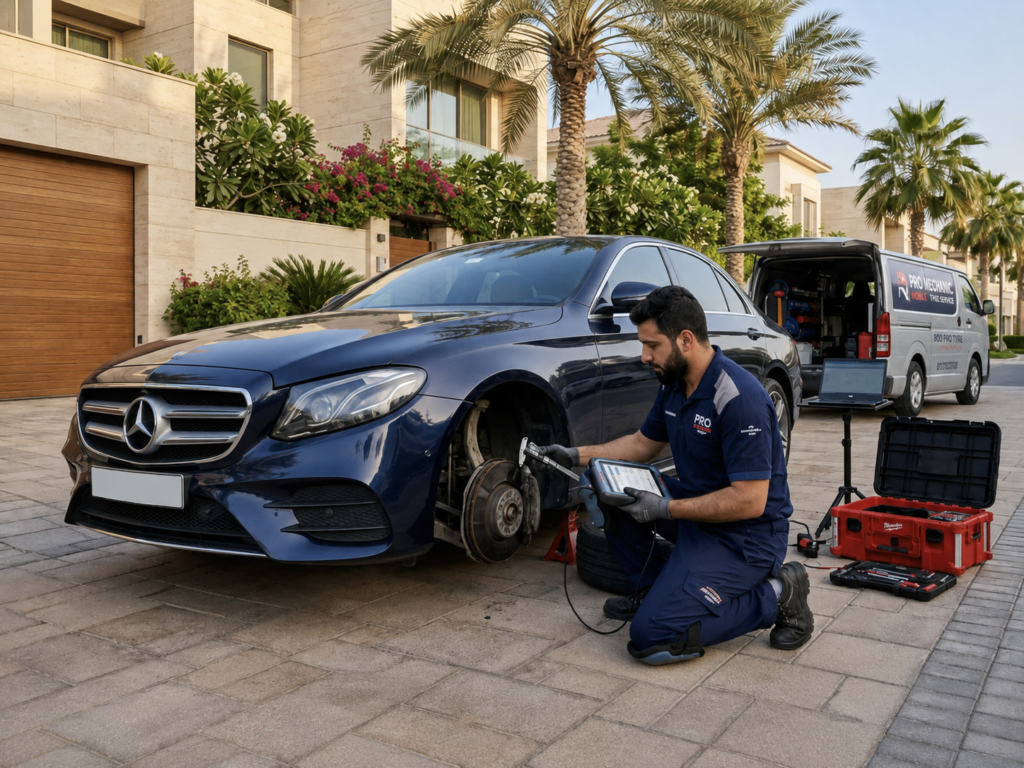
For many Dubai residents, visiting a testing centre once a year is inconvenient but manageable. The business case changes when dozens of vehicles are involved.
A security company, delivery operator, construction contractor or facilities management business may have vehicles deployed across different sites every working day. Removing a van or truck from service for travel, waiting and inspection can disrupt schedules even if the physical test itself is relatively short.
RTA states that a conventional light vehicle, light bus or motorcycle inspection is expected to take around 32 minutes, while heavy vehicles, heavy buses, trailers and semi-trailers can take around 45 minutes. Those figures cover the inspection rather than all the travel and operational time surrounding the visit.
For fleets, mobile inspection therefore creates several practical possibilities:
- Vehicles can remain closer to their operating base: A fleet manager could arrange testing at a depot or suitable company location rather than moving each eligible vehicle separately. This could be useful around Jebel Ali, Dubai Industrial City and other commercial areas where fleets may cover considerable distances each day.
- Several vehicles can be grouped into one visit: The announced Aber service allows customers to select the number of vehicles requiring inspection, with reports stating that up to nine vehicles can be handled in a visit. Grouping vehicles gives the mobile format a clearer operational advantage for businesses.
- Heavy vehicles gain an alternative to unnecessary repositioning: Trucks and other commercial vehicles can consume considerably more time and fuel when diverted from their normal routes. Mobile testing will not suit every inspection or vehicle, but it gives operators another option where the required test can be performed on location.
Dubai’s vehicle inspection system was already moving towards appointments
Aber is part of a wider shift in how Dubai manages vehicle testing rather than an isolated change.
From 2 June 2025, RTA made advance appointment booking mandatory for most vehicle inspections at technical testing centres across Dubai. The booking system followed a six-month pilot at Tasjeel Al Qusais and Al Barsha, where average customer waiting time reportedly fell by around 46 per cent.
RTA said the wider appointment system was expected to reduce waiting times by approximately 40 per cent while improving utilisation at busy testing centres.
There are exceptions to the appointment requirement for certain customers and inspection categories, and RTA’s current service page should be checked before visiting.
Against that background, mobile inspection pushes the same idea further. Instead of only controlling when customers reach a testing lane, RTA-approved testing can in suitable cases travel to the vehicle.
UAE heat and dust make roadworthiness more than paperwork
Technical inspection in the Emirates has particular relevance because local conditions can be demanding on vehicles.
High summer temperatures, prolonged motorway driving, dust and heavy air-conditioning use can expose weaknesses in tyres, cooling systems, batteries and other components. In June 2026, RTA’s summer safety campaign specifically urged drivers to monitor tyre condition, coolant, engine oil, air-conditioning performance and signs of fluid leakage as temperatures increased.
Owners should therefore avoid treating an annual inspection pass as proof that a vehicle needs no maintenance until the following year.
A few local checks remain especially worthwhile:
- Tyres deserve regular attention between inspections: High temperatures can increase the consequences of incorrect tyre pressure, ageing rubber or existing damage. RTA has advised drivers to monitor pressure, cracking and wear rather than waiting for the next official vehicle test.
- Cooling systems matter in UAE summer traffic: A vehicle that spends long periods in Dubai or Abu Dhabi congestion while running its air-conditioning continuously places considerable demand on its cooling systems. Coolant levels and evidence of leaks should be monitored as part of routine maintenance, not just when registration renewal approaches.
- GCC motorway use can expose problems quickly: Regular journeys between Dubai, Abu Dhabi, Al Ain or the Northern Emirates may involve sustained high-speed running for long periods. Brakes, tyres and fluid levels should therefore be checked throughout the year even when the car holds a valid inspection certificate.
Mobile inspection changes where the official test happens. It does not replace preventative maintenance.
What about used cars, luxury vehicles and modified cars?
Dubai’s car market is unusually diverse. A mobile inspection service may encounter everything from ordinary Toyota Camrys and Nissan Patrols to company vans, high-end SUVs and performance cars.
Owners of modified or unusual vehicles should be particularly careful when assuming that every inspection can be completed at their home or workplace.
RTA states that vehicles with special characteristics, including mobile kitchens and vehicles with modified bodies, are referred to the Technical Inspection Committee at the Licensing Department. Substantial engine or body modifications can also involve additional approval procedures.
This has obvious relevance in the UAE’s enthusiast and luxury-car market, where modified 4x4s, off-road builds, performance upgrades and imported vehicles are common sights.
Aber should therefore be viewed as another official inspection channel, not a way around the existing technical requirements.
Does mobile inspection replace Dubai’s testing centres?
No. RTA’s physical Vehicle Registration and Inspection Centres continue to operate, and conventional testing remains available.
Dubai has also continued expanding that physical network. In April 2026, RTA announced a new Al Mutakamela Vehicle Testing and Registration Centre in Al Qusais, taking its number of service locations across the emirate to 30 at that time.
The mobile model is better seen as an additional choice.
Some motorists will prefer the lower cost of visiting a centre. Others may decide that paying extra to have an inspection unit arrive at their home or workplace is worthwhile. For businesses, the decision is more likely to depend on fleet size, vehicle availability and the cost of taking vehicles temporarily out of operation.
Where Aber could make the biggest difference in the UAE
The most significant aspect of the June 2026 announcement is not simply that a vehicle test can take place outside a fixed centre. Mobile technical inspection has existed within RTA’s service framework before. What changes with Aber is the accessibility and visibility of the on-demand format, particularly with nationwide UAE availability being promoted at launch.
For a single Dubai motorist who lives ten minutes from a testing centre, AED 370 instead of AED 170 may be difficult to justify purely for convenience.
The calculation becomes more interesting for a household with limited time, someone unable to easily move a vehicle, or a company responsible for several commercial vehicles. It becomes stronger still when moving the vehicle itself is the expensive part of the process.
For the wider GCC automotive market, the service also fits a clear regional direction towards bringing routine automotive services closer to owners rather than requiring every transaction to begin at a workshop, dealer or government counter.
A more flexible inspection option for UAE vehicle owners
Aber does not change the basic responsibility placed on UAE vehicle owners. Cars and commercial vehicles still need to meet the required technical standards, and mobile inspection does not guarantee that a vehicle will pass.
What it changes is the journey to the inspection lane.
For private owners, that means the option of paying more for an RTA-approved inspection at a chosen location. For fleet operators, the more important benefit could be keeping vehicles closer to their normal routes and reducing the operational disruption involved in testing multiple units.
The AED 370 starting point for an applicable light-vehicle mobile inspection makes it a premium alternative rather than an automatic replacement for conventional testing. But in a market where businesses can operate dozens or hundreds of vehicles across Dubai and the wider UAE, the value of bringing the inspection equipment to the fleet may extend well beyond the cost of the test itself.