Mercedes-Benz G-Class Convertible Shows Its New Design for the First Time
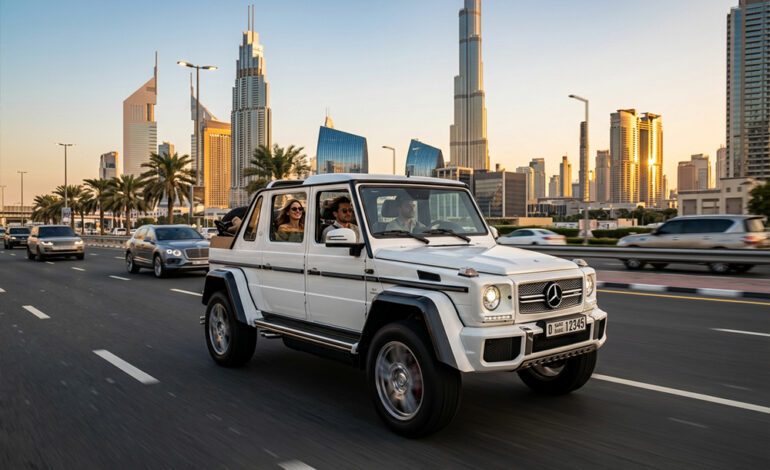
Mercedes-Benz has offered the clearest look yet at its returning G-Class Convertible, showing the roof lowered for the first time in July 2026. The latest teaser reveals a four-door body, a folding fabric roof and several AMG design cues, but this is not the complete production launch.
For buyers in the UAE and wider GCC, the main takeaway is simple: the open-top G-Class is real and undergoing development, but its regional availability, price, production numbers and final specifications have not been announced. Anyone considering a deposit should wait for confirmation from an authorised Mercedes-Benz distributor rather than relying on speculative listings or import offers.
The new G-Class Convertible design is finally visible
Mercedes-Benz confirmed the return of the G-Class Cabriolet in 2025 before sending prototypes for road and test-track development in Austria. The manufacturer also said the vehicle would undergo winter testing in Sweden to evaluate its reliability, driving behaviour and durability. Mercedes-Benz describes it as a special edition, suggesting availability could be more restricted than for the regular G-Class.
The July 2026 images move the story forward because they show how the open-top design works. Although parts of the prototype remain camouflaged, several important details can now be identified.
- It uses the modern four-door G-Class body: Earlier series-production G-Class Cabriolets were short-wheelbase, two-door models. The new vehicle retains four passenger doors, making it potentially more practical for families and rear-seat passengers.
- A folding fabric roof replaces much of the fixed upper body: The roof appears to retract electrically and stack behind the rear seats. When lowered, the folded material occupies a considerable part of the area used as the boot in a conventional G-Class.
- The prototype carries clear AMG cues: Side-exit exhausts, the front-end treatment and AMG markings point towards a G 63-based version. Mercedes-Benz has not yet confirmed whether every production model will be an AMG G 63 or whether additional powertrains will follow.
The spare wheel remains attached to the rear door, helping the convertible retain one of the G-Class’s most recognisable features. A substantial structure around the rear passenger area is also visible, although Mercedes-Benz has not explained its construction or published safety information.
This is more than a G-Class with its roof removed
Turning a tall, heavy off-roader into a convertible involves far more than replacing steel with fabric. The fixed roof normally contributes to structural rigidity, cabin refinement and protection from heat, noise and dust. Mercedes-Benz must address all of those areas while preserving the driving character expected from a G-Class.
Four doors change the open-top G-Class formula
The traditional G-Class Cabriolet was a compact, two-door model with a relatively short wheelbase. This new design uses the larger four-door format familiar to modern G-Class owners.
That should improve rear-seat access and make the car easier to use socially, particularly for Gulf buyers who frequently travel with family or friends. However, four doors also create a longer roof opening and more complex structural requirements. The final kerb weight, passenger space and body reinforcement have not been disclosed.
The folded roof brings a practical compromise
Images suggest that the fabric roof stacks high behind the second row, close to the level of the rear-mounted spare wheel. That arrangement preserves the G-Class silhouette, but it may reduce luggage capacity and rearward visibility when the roof is open.
These details matter more than they might on a conventional two-seat convertible. A buyer intending to use the car for airport trips, weekend luggage or GCC road journeys should inspect the usable boot space before ordering. Published capacity figures and a physical demonstration will be more useful than judging practicality from promotional photographs.
Refinement remains one of the unanswered questions
A production G-Class Convertible will need to manage wind noise, fabric movement and air leakage at motorway speeds. It will also need effective roof insulation when parked or driven in Gulf summer conditions.
Mercedes-Benz has not yet published noise measurements, roof insulation details or the time required to open and close the roof. The teaser also does not establish whether the mechanism can operate while the vehicle is moving. These points should remain unconfirmed until the full technical reveal.
The G-Class has open-top history, but this version is different
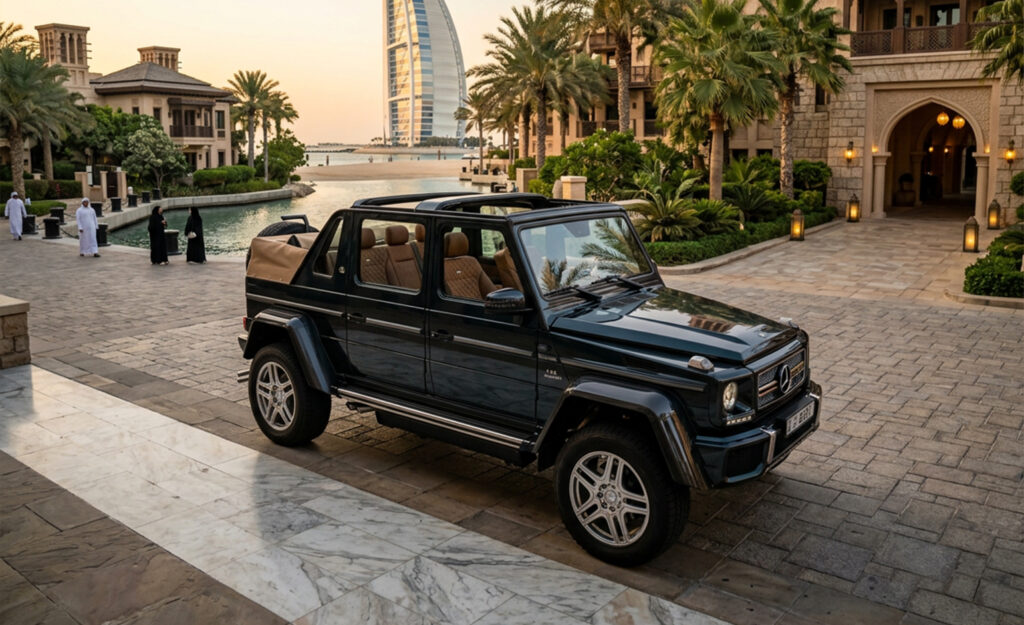
The convertible concept is not new to the G-Class. Mercedes-Benz offered short-wheelbase Cabriolet versions when the original model range arrived in 1979, and that body style remained in production until 2013. The company’s official history also confirms that the early G-Class was available in several body configurations rather than only as the familiar long-wheelbase station wagon.
Mercedes-Benz later introduced the Mercedes-Maybach G 650 Landaulet in 2017. Only 99 examples were produced, and its design left the front passengers beneath a fixed roof while providing a retractable fabric section for the rear cabin.
The latest G-Class Convertible follows a different approach. It is based on the current four-door model and appears to open the roof area over both rows. That makes it the first factory-backed convertible interpretation of the present G-Class generation rather than a continuation of the old two-door model.
What remains unconfirmed for UAE and GCC buyers
The latest images reveal the general design, but they do not provide enough information to make a fully informed purchase decision. Several reports have treated expected details as settled specifications, even though Mercedes-Benz has not confirmed them.
Prospective Gulf buyers should separate the following assumptions from verified information:
- UAE and GCC availability has not been announced: Mercedes-Benz has not published allocation numbers for the UAE, Saudi Arabia, Qatar, Kuwait, Bahrain or Oman. A broad international release does not guarantee that every GCC market will receive an official allocation.
- The final powertrain remains unconfirmed: The prototype strongly resembles the Mercedes-AMG G 63, whose current production version uses a 4.0-litre V8 biturbo engine producing 430 kW, or 585 hp, and 850 Nm. Those figures belong to the regular G 63 and should not be presented as confirmed specifications for the convertible.
- No official price has been released: The convertible’s roof system, structural changes and special-edition positioning are likely to make it more expensive than an equivalent hardtop, but no accurate UAE price can be calculated yet. Any advertised figure should be treated as an estimate unless it comes from an authorised regional distributor.
Production quantity, delivery timing, exterior dimensions, boot capacity and standard equipment also remain unknown. Mercedes-Benz has not confirmed whether the final name will be G-Class Cabriolet, G 63 Cabriolet or another special-edition designation.
Gulf conditions will put the fabric roof to work
An open-top G-Class could suit the UAE particularly well during the cooler months, when evening drives through Dubai, coastal routes in Abu Dhabi and mountain roads around Ras Al Khaimah become far more enjoyable. For much of the year, however, the vehicle will operate with its roof closed and air conditioning working hard.
That makes roof construction and maintenance central to the ownership experience.
- Heat resistance should be checked carefully: Ask how the roof fabric, internal lining, hydraulic or electric mechanism and seals have been validated for sustained high temperatures. A shaded or enclosed parking space will reduce exposure when the car is not being used.
- Dust can affect more than the appearance: Fine sand may collect around roof joints, drainage channels and moving components. Owners should follow the manufacturer’s cleaning procedure and avoid directing high-pressure water closely at seals or roof openings unless the handbook specifically permits it.
- Cabin cooling deserves a proper test: A large fabric roof may behave differently from the insulated metal roof fitted to the standard G-Class. Buyers should assess air-conditioning performance, rear-cabin cooling and heat entering through the roof during a daytime UAE test drive.
The soft top should also be completely dry before the vehicle is stored for an extended period. Folding damp or dirty fabric can encourage staining, unpleasant odours and premature wear, depending on the roof material and storage conditions.
Insurance, warranty and imports could influence the real cost
A rare convertible G-Class is unlikely to be purchased on price alone, but the route through which it is bought may affect its long-term value and ownership costs. This is particularly relevant if official GCC allocations are limited and parallel imports arrive first.
Before paying a deposit, buyers should complete several checks:
- Confirm the exact regional specification by VIN: Establish whether the vehicle is GCC-specification and whether its warranty will be honoured by the authorised distributor in the country where it will be registered. Imported cars may have different equipment, connected services or warranty conditions.
- Obtain an insurance quotation for the actual variant: Do not assume that a standard G 63 quotation will apply to a convertible special edition. Ask whether damage to the roof fabric, mechanism, seals, trim and associated electronics is covered under the comprehensive policy.
- Ask about roof-system service support: Confirm which authorised workshop can diagnose and repair the roof, and whether replacement fabric, seals and mechanical components will be stocked regionally. Long parts delays matter when the car cannot be secured or made weatherproof.
Buyers should also check how the insurer will value the car if its market price includes a significant early resale premium. The invoice price, insured value and replacement cost may not automatically be the same.
Could the G-Class Convertible hold its value in the UAE?
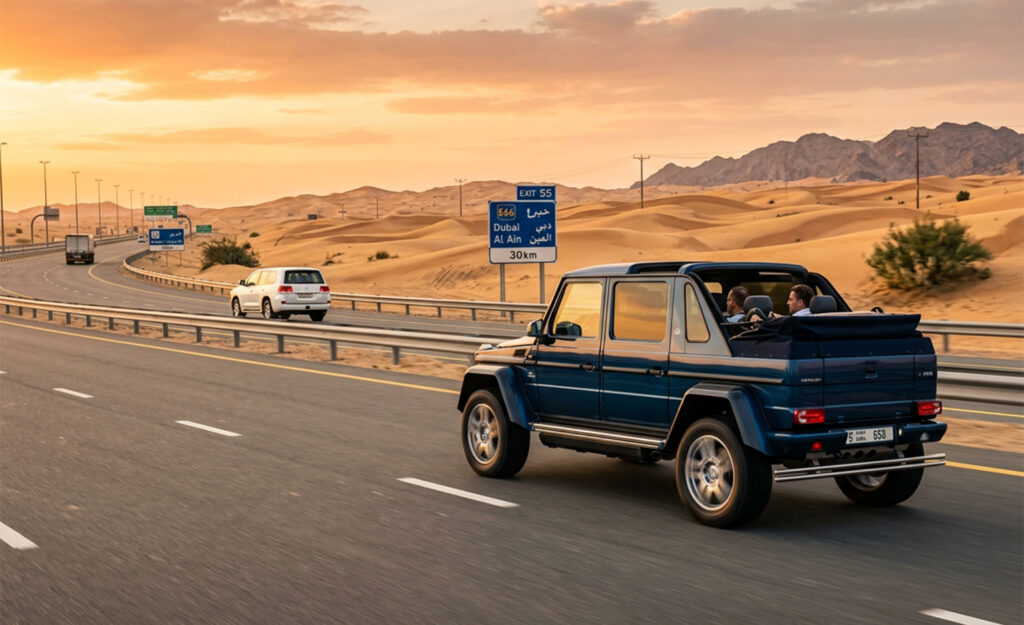
Limited-production G-Class models often attract attention from collectors, but strong resale value should not be treated as guaranteed. Final production volume, specification, colour, service history, accident record and regional demand will all influence future prices.
An officially supplied GCC car with complete dealer records is generally easier for a subsequent buyer to assess than an imported example with uncertain coverage. The condition of the roof could become particularly important. Faded fabric, damaged seals, unusual wind noise or evidence of water entering the cabin may reduce buyer confidence even when the rest of the vehicle appears clean.
Anyone purchasing primarily as a collectible should resist modifying the roof, exhaust, body structure or electronics. Unauthorised alterations can complicate warranty claims, insurance repairs and eventual resale.
Who should wait for the full reveal?
The new G-Class Convertible makes the most sense for someone who already understands that it is a lifestyle-focused version of a luxury off-roader. It may provide more rear-seat usability than previous G-Class Cabriolets, but its reduced luggage area and more complicated roof introduce compromises that the regular G 63 does not have.
Buyers should wait for the production reveal if any of the following matters to their decision:
- The vehicle will be used as a daily family SUV: Published luggage capacity, rear-seat comfort and roof-up refinement need to be checked first. A conventional G-Class may remain the more practical option.
- The purchase depends on official UAE warranty coverage: Do not rely on a verbal promise from an independent seller. Obtain written confirmation covering the specific VIN, supplying dealer and country of registration.
- The car will regularly travel between GCC countries: Confirm roadside assistance, warranty recognition and insurance coverage outside the home market. These conditions can vary between policies and distributors.
A distinctive Gulf-season G-Class, with questions still to answer
The latest Mercedes-Benz G-Class Convertible images show a far more usable design than the old two-door Cabriolet, while retaining the square body, rear spare wheel and imposing presence that define the model. Its four doors and open roof could make it particularly appealing during the Gulf’s cooler driving season.
For now, however, it remains a partially camouflaged special edition without confirmed UAE pricing, allocation or final specifications. Gulf buyers should wait for official regional details, examine the folded roof’s effect on luggage space and secure written warranty and insurance terms before committing. The design is no longer a secret, but the ownership proposition is not yet complete.