BYD Da Han Targets the Mercedes EQS, BMW i7 and NIO ET9, but Is It Ready for the Gulf?
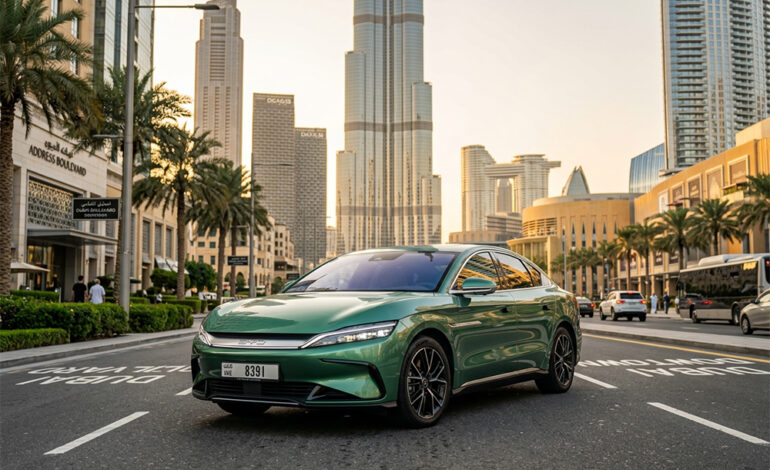
BYD is preparing to move beyond value-focused electric cars with the Da Han, a full-size flagship saloon aimed at the territory occupied by the Mercedes-Benz EQS, BMW i7 and NIO ET9. Official images and Chinese regulatory filings show a car with serious dimensions, a large LFP battery and up to 570 kW of power.
The BYD Da Han is scheduled to make its public debut at the Chengdu Motor Show, which runs from 21 to 30 August 2026. However, as of 5 August 2026, BYD has not confirmed a UAE or wider GCC launch, regional price, local warranty or final Gulf specification.
That distinction matters. On paper, the Da Han has the size and technical figures to challenge established luxury EVs. For a UAE buyer, however, it is not yet a showroom alternative to the EQS or i7. Its real appeal will depend on its price, heat-tested range, charging compatibility, dealer support and how much of its China-market technology works locally.
The BYD Da Han sits above the familiar Han EV
The Da Han, also translated as Great Han or Grand Han, should not be confused with the existing BYD Han sold in the UAE. It is a new D-segment flagship positioned above the current car in BYD’s Dynasty range.
Chinese regulatory data reported by CnEVPost lists the Da Han at 5,256 mm long, 1,999 mm wide and 1,510 mm high. Its 3,130 mm wheelbase confirms that this is a genuine full-size luxury saloon rather than a slightly stretched executive car.
The five-seat layout also suggests that BYD wants the Da Han to work for both owner-drivers and chauffeured customers. The main specifications disclosed so far include:
- A long-range rear-wheel-drive EV: The single-motor electric version produces 370 kW and uses a 102.3 kWh LFP battery. BYD is promoting a range of up to 1,008 km under China’s CLTC test cycle, although that figure should not be treated as an expected UAE driving range.
- A much more powerful all-wheel-drive model: The dual-motor version combines a 200 kW front motor with a 370 kW rear motor, producing 570 kW in total. Regulatory information points to an 880 km CLTC range and a maximum speed of 270 km/h, making it the performance flagship of the range.
- A plug-in hybrid alternative: BYD has also filed a version using a 1.5-litre turbocharged petrol engine and a 200 kW electric motor. This could be particularly relevant to Gulf drivers who regularly travel between cities but do not have dependable charging at home or at their destination.
A panoramic glass roof, semi-hidden door handles, 20-inch or 21-inch wheels and a roof-mounted LiDAR sensor also appear in the filings and official images. Full equipment details, acceleration figures and charging times are expected closer to the model’s debut.
BYD Da Han specifications put it among serious luxury EVs
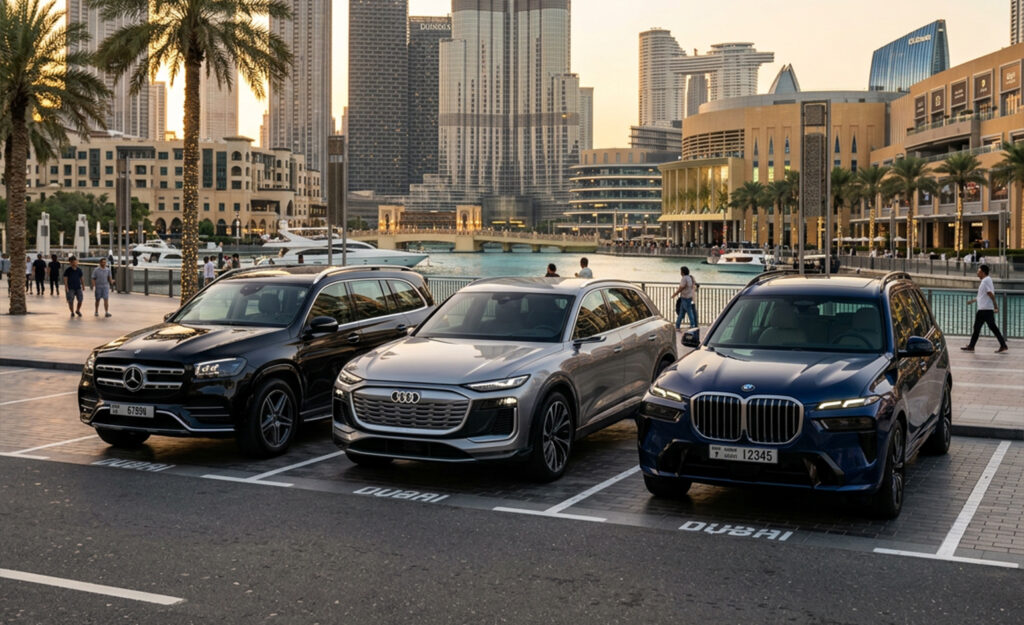
The Da Han’s rivals approach electric luxury in different ways. Mercedes-Benz and BMW bring established premium identities and extensive regional service support, while NIO treats the flagship saloon as a technology showcase. BYD appears to be combining high performance, long claimed range and a potentially more accessible price, although pricing remains unconfirmed.
Here is where the Da Han stands against the main reference points:
- Mercedes-Benz EQS: The latest EQS information published by Mercedes-Benz Abu Dhabi quotes a range of up to 926 km under WLTP testing. It also introduces an 800-volt electrical system, rear-wheel steering and the ability to add up to 320 km of WLTP range in ten minutes under suitable charging conditions.
- BMW i7: The official BMW AGMC i7 page lists up to 625 km of range, 400 kW of power and 745 Nm of torque for the i7, while the i7 M70 produces 485 kW. The BYD has a higher stated peak output in all-wheel-drive form, but power alone does not establish ride quality, refinement, braking performance or long-term ownership support.
- NIO ET9: NIO’s technology-led flagship is 5,325 mm long and uses a four-seat executive layout. Its official specification includes a 925-volt system, up to 600 kW peak charging capability, steer-by-wire, rear-wheel steering and an integrated hydraulic active suspension system called SkyRide.
The ET9 is arguably the Da Han’s most direct conceptual rival. Both cars represent Chinese manufacturers attempting to redefine the flagship saloon around batteries, software, active chassis systems and rear-seat technology rather than relying on decades of luxury-brand history.
Yet their regional positions are different. NIO has an official presence in the Emirates, including facilities in Abu Dhabi and Dubai, but the NIO UAE model list does not currently include the ET9. BYD’s official UAE range includes the existing Han but not the Da Han.
The 1,008 km BYD range claim needs context
The four-digit range figure will attract attention, particularly among buyers concerned about travelling between Dubai, Abu Dhabi, Al Ain and the Northern Emirates. It should not be compared directly with the published UAE figures for the EQS or i7 without understanding how the cars were tested.
CLTC and WLTP figures are not interchangeable
The Da Han’s 1,008 km claim comes from the China Light-Duty Vehicle Test Cycle. The EQS and i7 figures published by their regional representatives use the WLTP system.
CLTC testing generally produces more optimistic results than WLTP because the two procedures use different speeds, driving patterns and test conditions. There is no single reliable percentage that converts one result into the other across every vehicle, so the Da Han cannot yet be declared a longer-range car than the EQS based solely on these numbers.
UAE buyers should wait for an internationally comparable rating or an independent test conducted at Gulf motorway speeds. A large battery helps, but vehicle weight, aerodynamics, air-conditioning demand and powertrain efficiency all influence the distance covered.
Peak charging speed is only part of the story
BYD is expected to use its newer Blade Battery and high-voltage charging technology in the Da Han, but a complete production charging specification has not been released for an export model. A short peak figure does not reveal how long the car can maintain that speed as the battery fills.
The more useful measurements will be the charging time from 10 to 80 per cent, the shape of the charging curve and the power available when the battery is already hot. Buyers should also check which charging connector a GCC-specification car uses and whether compatible public chargers can supply its maximum rate.
Gulf heat changes everyday energy use
Electric cars use energy to cool both the cabin and the battery. In a parked car exposed to summer heat, initial air-conditioning demand can be substantial, while sustained 120 km/h motorway driving consumes more energy than a gentle laboratory cycle.
This does not mean the Da Han will perform poorly in the Gulf. It means BYD needs to demonstrate effective thermal management, reliable battery preconditioning and consistent charging in high ambient temperatures. Those qualities will matter more to owners than a record figure achieved under a different test procedure.
Luxury is about more than screens and acceleration
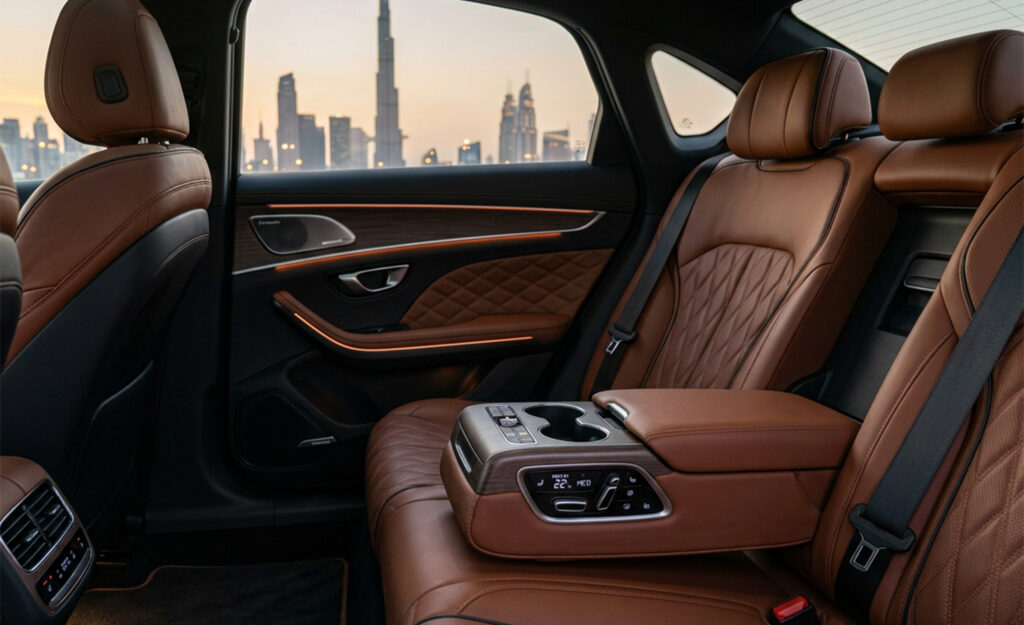
A flagship saloon is judged differently from a mainstream EV. Buyers expect quiet operation, controlled body movement, comfortable rear seats, effective climate control and an ownership experience that does not become difficult when a sensor or trim component needs replacing.
The Da Han’s size should provide generous cabin space, while rear-wheel steering could make it easier to manoeuvre in underground car parks and tight hotel entrances. However, official images cannot show whether its suspension isolates broken surfaces, how effectively the cabin controls road noise or whether the air-conditioning remains strong for rear passengers in August.
Before treating it as an alternative to an EQS, i7 or ET9, Gulf buyers should examine these areas:
- Rear-seat comfort: Check headroom beneath the panoramic roof, thigh support, seat ventilation and the strength of the rear air-conditioning vents. A comfortable showroom seat can feel very different after a two-hour journey between Abu Dhabi and the Northern Emirates.
- Ride quality on large wheels: The 21-inch wheels shown on higher versions may improve appearance and steering response, but low-profile tyres can make the ride firmer. Replacement tyres may also cost more and could be harder to source if BYD specifies an unusual size.
- Cabin operation in strong sunlight: Glossy screens, glass roofs and touch-sensitive controls need to remain usable in bright Gulf conditions. A proper test drive should include daytime visibility checks and enough time to see how quickly the cabin cools after being parked outside.
The ownership checks Gulf buyers should not skip
BYD already has an official regional relationship with Al-Futtaim and an expanding UAE product range. That gives a possible future Da Han an important advantage over an unsupported private import, but existing BYD arrangements should not be assumed to apply automatically to a model that has not been announced locally.
Anyone considering the Da Han should obtain written answers covering the following points:
- GCC specification and battery warranty: Confirm that the car is supplied by the authorised regional distributor and ask for the exact vehicle, battery and high-voltage component warranty terms. The agreement should identify mileage limits, the battery capacity threshold and any exclusions related to charging, water damage or commercial use.
- Charging, apps and connected services: Verify the charging port, home charger requirements, navigation data, mobile app access and over-the-air update support. Hardware such as LiDAR does not guarantee that every driver-assistance function offered in China will be approved or enabled in the UAE.
- Parts and accident repair: Ask whether windscreens, lighting units, body panels, suspension components and electronic modules are stocked regionally. Cars fitted with cameras, radar and LiDAR may require sensor calibration after a windscreen replacement or front-end repair.
- Insurance and future resale: Obtain an insurance quotation before paying a deposit, particularly if the vehicle is new to the market or privately imported. Check agency repair eligibility, battery damage coverage and how the insurer handles parts delays, because these factors can affect both ownership costs and later resale confidence.
A low purchase price can lose much of its advantage if the car spends weeks waiting for a model-specific component. This is one area where Mercedes-Benz and BMW benefit from established Gulf service networks and longer regional ownership histories.
Should UAE buyers wait for the BYD Da Han?
The Da Han deserves attention, but waiting for it only makes sense if the buyer has flexibility and understands that a Gulf launch remains unconfirmed. It should not delay an urgent purchase based on specifications from a Chinese-market filing.
A sensible buying approach depends on the situation:
- Buy an established alternative if support is the priority: UAE buyers who need a luxury EV now can evaluate locally represented models such as the BMW i7 and Mercedes-Benz EQS through official channels. Real quotations, local warranty documents, insurance terms and test drives provide a firmer basis for a decision than preliminary Da Han figures.
- Wait if value and new battery technology matter most: Buyers who are not in a hurry may prefer to see the final Da Han launch, pricing and full charging specification. If an official UAE version follows, it can then be compared using local warranty coverage, equipment and ownership costs rather than Chinese-market assumptions.
- Be cautious about importing one privately: A China-specification Da Han may have differences in its charging connector, software, mapping, language support, warranty and connected services. Saving money on the purchase can create expensive complications when the vehicle requires diagnostic work, accident repair or a replacement high-voltage component.
Prospective chauffeur-service operators should also wait for confirmed commercial-use warranty conditions. High annual mileage, frequent rapid charging and extended rear climate-control use may be treated differently from normal private ownership.
A credible flagship challenge, but not yet a Gulf buying decision
The BYD Da Han shows how quickly the luxury electric saloon market is changing. A 5.26-metre BYD with up to 570 kW, a large LFP battery and rear-wheel steering would have seemed unlikely only a few years ago. It now looks like a credible response to the EQS, i7 and ET9 on specification.
For Gulf buyers, the unanswered questions remain more important than the headline numbers. UAE pricing, real motorway range, summer charging performance, warranty protection, insurance acceptance and parts supply have not been confirmed.
Until BYD announces a GCC-specification model through its regional distributor, the Da Han is best viewed as a strong signal of what is coming rather than a car ready for a UAE purchase decision.