How the Ford Mustang Created Muscle Car Culture in the Gulf
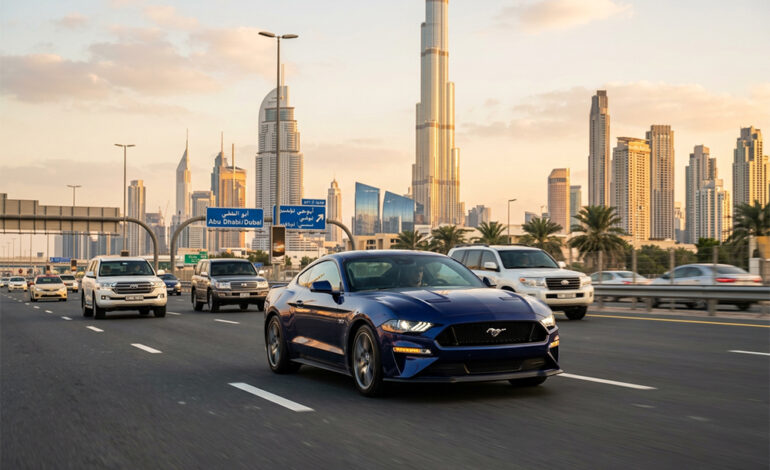
The Ford Mustang did not create the Gulf’s appetite for powerful American cars on its own, but it gave that appetite a shape, a sound and an identity. For generations of drivers in the UAE, Saudi Arabia, Kuwait, Bahrain, Qatar and Oman, the Mustang became the most recognisable route into V8 performance: dramatic enough to feel special, familiar enough to use regularly and attainable compared with an imported European exotic.
That influence remains visible today. Ford continues to offer the Mustang in the UAE with a 5.0-litre V8, while Al Tayer Motors announced an official UAE distribution and service partnership for Shelby-modified Ford vehicles in April 2026. The Ford Mustang muscle car culture in the Gulf is therefore not simply a memory from the 1960s and 1970s. It is a living scene supported by modern cars, classic collectors, specialist workshops, owners’ clubs and regional motorsport venues.
The Mustang arrived with the right formula at the right time
Ford unveiled the Mustang to the public at the New York World’s Fair on 17 April 1964. More than 22,000 orders were placed during its opening weekend, over 420,000 cars were sold in the first calendar year and the one-millionth Mustang left the production line in March 1966. Those figures mattered far beyond the United States because they established the Mustang as a global cultural product rather than a niche sports car.
Strictly speaking, the original Mustang created the “pony car” class rather than the traditional muscle car category. It was smaller and more style-led than the large-engined intermediate saloons commonly associated with classic American muscle. Yet the distinction became less important once buyers could order V8 power, performance packages and increasingly aggressive fastback bodies.
In the Gulf, “muscle car” developed into a broader cultural description. It came to represent front-engined American performance cars with strong visual presence, a deep exhaust note and straightforward mechanical character. The Mustang fitted that understanding perfectly.
Ford’s wider presence in the Middle East also gave the model a foundation. The company said in 2018 that its regional history stretched back more than 60 years, meaning Ford products were already familiar across Gulf markets by the time later Mustang generations became widely visible through importers, dealers and private imports.
Why the Ford Mustang in the Gulf became more than a sports car
The Mustang suited Gulf tastes because it combined several qualities that rarely appeared together in one car. It looked theatrical without requiring supercar money, offered engines that worked well for long-distance cruising and encouraged owners to personalise almost every visible or mechanical detail.
Three characteristics helped it take root:
- V8 performance felt accessible rather than remote. A Mustang GT offered the sound and straight-line character associated with much more expensive machinery. That made it an aspirational car for younger enthusiasts while remaining a realistic purchase for established buyers who wanted a second or third car.
- The design was instantly readable. The long bonnet, short rear deck, fastback roof and galloping pony badge required little explanation. On wide roads in Dubai, Abu Dhabi, Riyadh, Kuwait City and Doha, the car had the visual presence needed to stand apart in traffic.
- Personalisation was part of the product’s identity. Wheels, exhaust systems, suspension, body kits, stripes and engine upgrades allowed two Mustangs of the same model year to feel completely different. That freedom helped ownership become a social activity rather than a simple purchase.
The Gulf’s long highways also played to the Mustang’s strengths. A V8 coupe with a relaxed cruising character made sense for inter-emirate journeys in the UAE and longer drives between major cities in Saudi Arabia, Kuwait, Bahrain, Qatar and Oman. The car was not designed for desert driving, but it matched the region’s combination of broad motorways, late-night cruising and strong enthusiasm for cars with visible personality.
From pony car to muscle icon
The Mustang’s regional status cannot be explained by one generation. Its appeal was built through a sequence of cars, badges and media moments that kept refreshing the same basic promise.
The first-generation fastback created the visual template
Early notchback coupes made the Mustang a commercial success, but the fastback body gave it the shape that enthusiasts still associate most strongly with American performance. Wider, more aggressive late-1960s cars strengthened that image, particularly versions carrying names such as Mach 1, Boss and Cobra Jet.
For Gulf collectors today, these cars represent more than vintage transport. They connect American design history with the UAE and GCC’s modern classic-car scene. A properly restored first-generation Mustang can sit comfortably at a heritage gathering, a concours-style display or beside contemporary performance cars at an owners’ meet.
Shelby gave the Mustang genuine racing credibility
Carroll Shelby’s involvement changed the Mustang from a stylish road car into a serious performance platform. The first Shelby GT350 appeared for 1965, while the GT500 followed in 1967 with a larger V8 and a more forceful grand-touring character. Ford later described the first GT500 as a road car shaped by Shelby’s racing experience and the company’s endurance-racing success.
The Shelby name became especially important in the Gulf because it added rarity and status to an already familiar car. A standard Mustang could be the entry point, a Mustang GT the everyday performance choice and a Shelby the collector-grade flagship. That hierarchy helped the model appeal across several levels of the market.
Cinema made the Mustang recognisable before many buyers drove one
The 1968 Mustang GT fastback used in Bullitt became one of the most famous film cars ever built. Its extended San Francisco chase gave the Mustang an image based on restraint, speed and mechanical sound rather than decoration. Ford has repeatedly returned to that association through later Bullitt editions.
Other screen appearances, including the “Eleanor” Mustang associated with Gone in 60 Seconds, introduced the car to younger audiences. Imported films, television, magazines and later online video meant Gulf enthusiasts often knew the Mustang’s silhouette and soundtrack before seeing large numbers of them on local roads.
That media familiarity mattered. European performance cars were often admired for engineering and prestige, but the Mustang arrived with a ready-made story about freedom, rebellion and modification. Owners could buy into that story without needing to explain the badge.
Dubai and Abu Dhabi turned the Mustang into a public spectacle
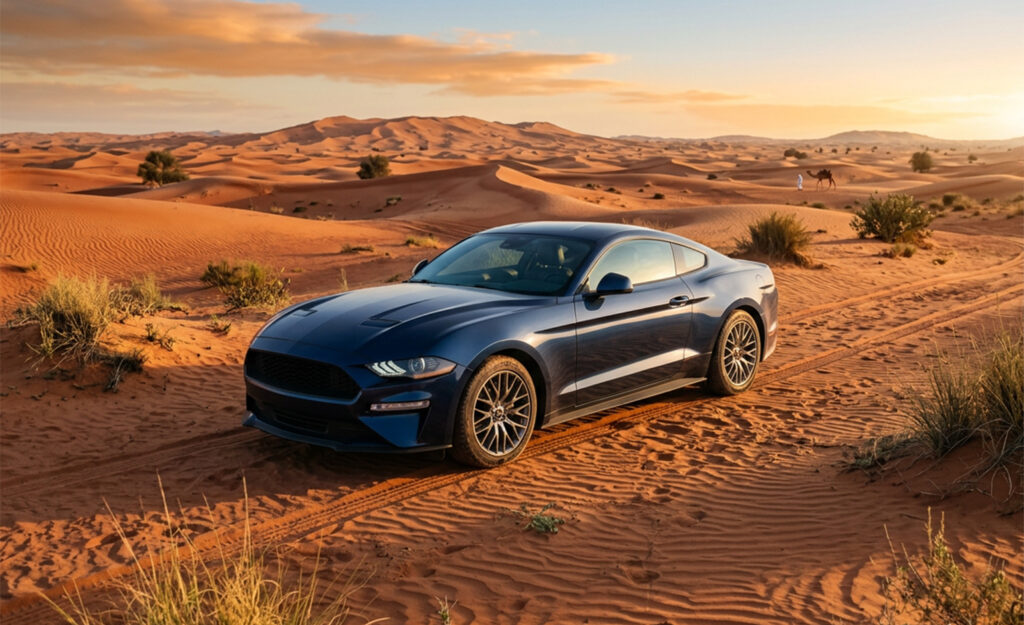
The UAE gave Ford some of the model’s most visible regional moments. In November 2014, Ford introduced the then-new global Mustang in the Middle East through a live event at the Burj Khalifa. Placing the car on the world’s tallest building was more than a dramatic launch stunt. It showed that Ford viewed the Gulf as a serious audience for the Mustang’s new global era.
The model then appeared in settings that reinforced both lifestyle and performance. The 2018 Mustang made its regional debut ahead of the Dubai International Motor Show, while Ford also used Bahrain International Circuit for a regional track event. These were carefully chosen locations: Dubai connected the car with design, luxury and public visibility, while Bahrain linked it to a mature motorsport venue.
Ford’s 2018 anniversary campaign also involved Middle Eastern owners contributing Mustang photographs to a digital pony-badge mosaic. The exercise was promotional, but it reflected a real shift. Mustang owners in the region were no longer simply customers. They had become a recognisable enthusiast community.
The UAE’s influence can be seen through several recurring parts of the scene:
- Owners’ clubs made the car visible in groups. A single Mustang attracts attention, but a convoy of cars from different generations creates a moving history lesson. Group drives through the northern emirates, mountain routes and city roads helped turn private enthusiasm into a public community.
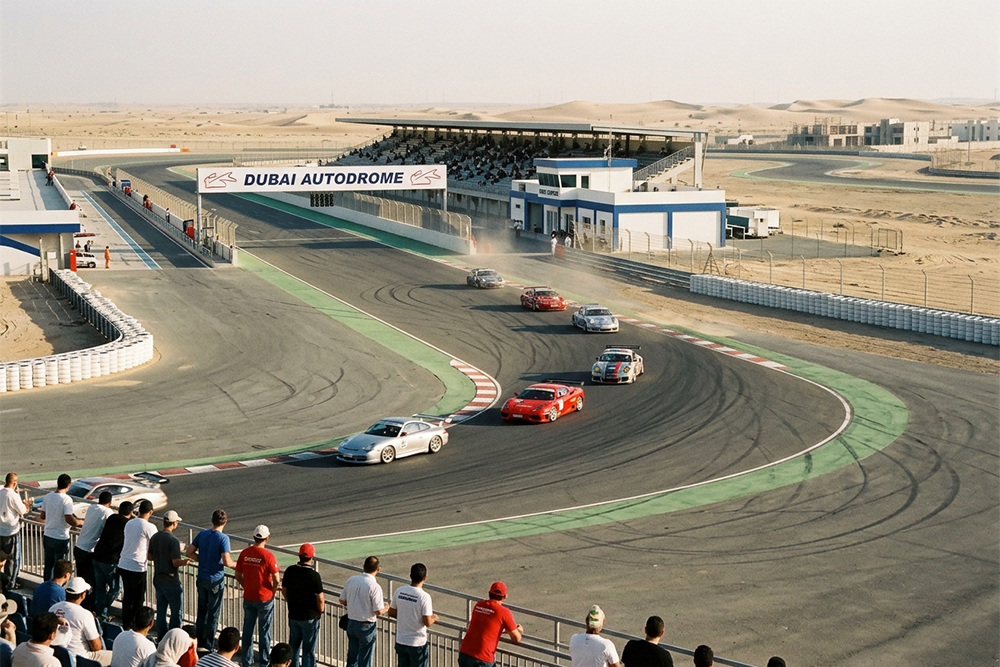
- Track days and controlled performance events gave owners somewhere to use the cars properly. Circuits in Dubai, Abu Dhabi and Bahrain offered a safer setting for acceleration, handling and driver training than public roads. They also encouraged owners to think beyond straight-line speed and invest in brakes, tyres and cooling.
- Specialist workshops made modification easier. The growth of performance garages in the UAE and wider GCC gave owners access to exhaust work, suspension upgrades, forced induction, tuning and cosmetic changes. The Mustang’s large international aftermarket made it particularly suitable for this workshop-led culture.
The Mustang made American muscle easier to understand
Before the Gulf became a major market for modern performance cars, classic American muscle could be difficult to navigate. Dodge, Plymouth, Chevrolet, Pontiac and Ford all produced memorable models, but many nameplates changed quickly or disappeared. The Mustang was different because its identity survived.
Ford has kept the Mustang in continuous production since 1964. That consistency gave Gulf buyers a clear line from a 1960s fastback to a contemporary GT. Someone drawn to a classic model could buy a newer car with familiar styling cues, while a modern owner could begin learning about Mach 1s, Boss 302s and Shelby variants through the same badge.
This continuity helped the Mustang act as a gateway to wider American car culture. Owners who started with a late-model GT often developed an interest in the Chevrolet Camaro, Dodge Challenger, Shelby Cobra, Ford GT or earlier muscle-era cars. The Mustang did not eliminate its rivals. It helped create the audience that made those rivals more desirable.
Its relatively broad range also mattered. Four-cylinder, six-cylinder and V8 versions appeared across different eras, and convertibles sat alongside coupes and fastbacks. Purists may focus on the V8 cars, but the availability of less expensive versions brought more people into the community.
Modern generations kept the culture alive
The Mustang’s Gulf story could have faded during the less celebrated periods of American performance design, but later generations rebuilt the connection.
The fifth-generation Mustang, launched for the 2005 model year, was particularly important because it revived the proportions and details of the late-1960s cars. It looked familiar without being a replica, and its design arrived just as the UAE and wider GCC performance-car scene was becoming more visible through major motor shows, online forums, clubs and specialist garages.
The sixth generation widened the Mustang’s international reach. Ford launched it as a global product and introduced the model to the Middle East with the Burj Khalifa event in 2014. Independent rear suspension, modern cabin technology and more polished road manners helped it compete as a genuine sports coupe while keeping the V8 GT at the centre of the range.
High-performance derivatives raised the ceiling further. In 2020, the Middle East’s first new-generation Shelby GT500 was delivered to an owner in Abu Dhabi through Al Tayer Motors and Premier Motors. The car used a supercharged 5.2-litre V8 and a dual-clutch transmission, placing Mustang performance firmly into supercar territory.
In 2026, the official arrival of Shelby-modified vehicles through Al Tayer Motors added another layer. The agreement covers retail and service support for Shelby Mustang variants and Shelby trucks across the UAE. For enthusiasts, the significance lies not only in access to more powerful cars, but also in the promise of formal warranty and aftersales backing rather than relying entirely on grey imports or independent conversions.
Gulf conditions shaped how owners built and maintained Mustangs
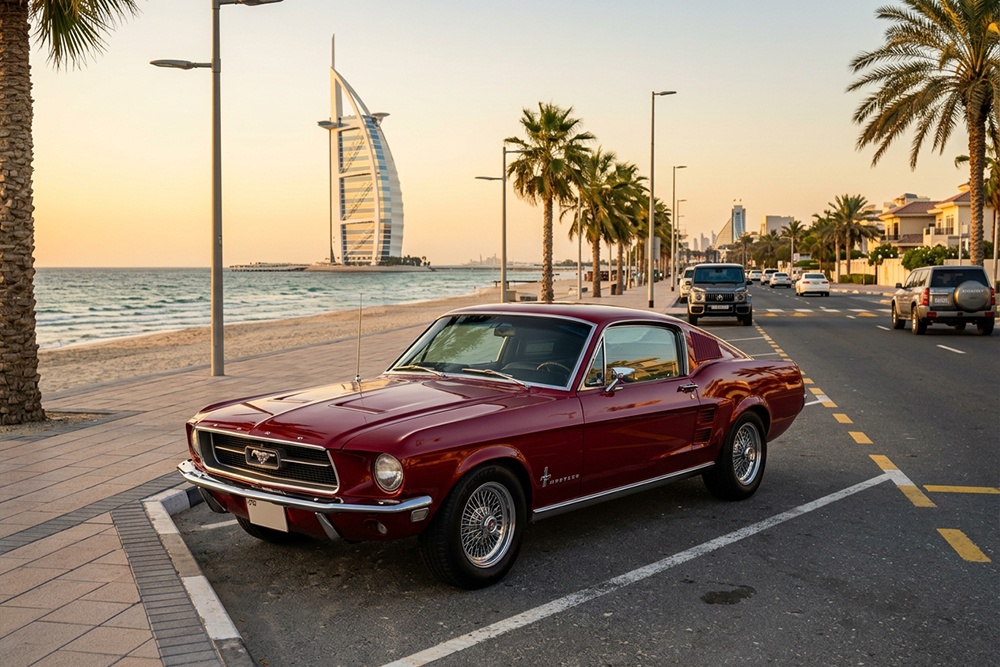
The Mustang may suit the Gulf culturally, but local conditions can be demanding mechanically. High ambient temperatures, dust, heavy traffic and extended motorway speeds place extra stress on cooling systems, tyres, batteries, fluids and air-conditioning components. Modified cars can be even more sensitive if upgrades are poorly matched.
Owners and used-car buyers should pay particular attention to the following areas:
- Cooling performance matters more than headline horsepower. Radiators, coolant hoses, fans, thermostats and engine-oil temperatures deserve close inspection, especially on older V8 cars or modified examples. A powerful Mustang that cannot manage summer traffic in Dubai or Riyadh is not a usable Gulf car.
- Import history should be verified carefully. Many Mustangs in the regional used market originated in North America, and some may have salvage, accident or flood histories. Buyers should compare the chassis number with available records, inspect structural repair quality and avoid assuming that a clean exterior means a clean past.
- Modifications can improve or damage the car. A well-installed exhaust, suspension package or brake upgrade may suit local use, while an aggressive tune, cheap forced-induction kit or badly lowered suspension can create reliability and inspection problems. Receipts, calibration details and workshop reputation matter as much as the parts list.
- Insurance and resale depend on specification and condition. Standard GCC-specification cars with clear dealer histories are usually easier for mainstream buyers to understand. Rare Shelby, Mach 1 or classic variants may attract collectors, but originality, documentation and parts quality have a major effect on value.
For everyday use, owners also need to consider ground clearance, tyre choice and cabin heat. Large wheels and very low-profile tyres may look effective in photographs but can make urban driving harsher. Dark interiors, heavy tinting choices and ageing air-conditioning systems also become noticeable during long UAE summers.
What the Mustang changed in the wider GCC car scene
The Mustang’s deepest influence was not a sales figure or a single model. It normalised the idea that an enthusiast car could be emotional, customisable and relatively attainable at the same time.
That changed the Gulf performance market in several ways:
- It created a recognisable first step into performance ownership. Buyers did not need specialist knowledge to understand a Mustang GT. The badge, V8 sound and familiar shape communicated the car’s purpose immediately, which made the model easier to recommend, buy and resell within enthusiast circles.
- It encouraged participation rather than passive admiration. The Mustang invited owners to join clubs, attend meets, modify their cars and learn about mechanical differences between generations. This participatory culture is one reason the car maintained relevance even when newer or faster alternatives appeared.
- It gave American performance a permanent place beside European and Japanese cars. Gulf enthusiasts could appreciate a Porsche 911, Nissan GT-R, Toyota Supra and Mustang for different reasons. The Mustang helped ensure that accessible V8 performance remained part of the region’s mixed automotive identity.
The car also bridged social and generational gaps. Older collectors could value a restored 1960s fastback, younger drivers could enter through a used modern GT and high-end buyers could pursue a Shelby. Few performance nameplates have covered that much ground without losing their visual identity.
A Gulf muscle-car culture still built around the pony badge
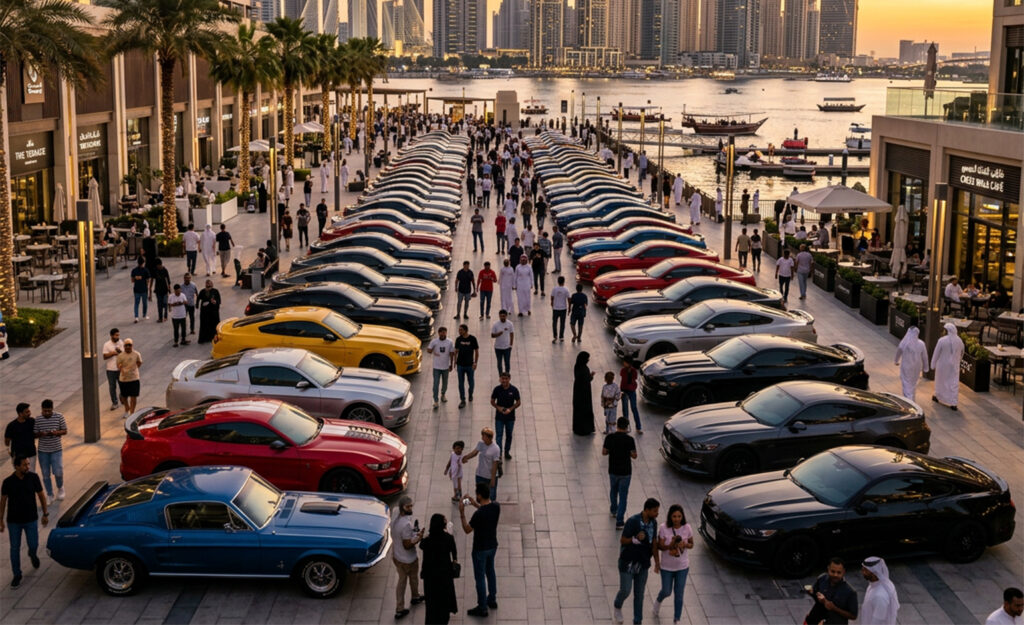
The Mustang did not become a Gulf icon because it was always the fastest, most sophisticated or most exclusive car available. It succeeded because it was easy to recognise, enjoyable to personalise and capable of making ordinary drives feel like an occasion.
Its influence can be seen in classic-car collections, late-night city meets, track events, specialist workshops and the continuing demand for V8 coupes. Ford’s current UAE range and the formal expansion of Shelby support show that the market still sees value in the same formula more than six decades after the original car appeared.
That is the Mustang’s real contribution to Gulf muscle car culture. It turned American performance from a distant image into something owners could buy, drive, modify, share and pass from one generation to the next.