Audi e-tron, BMW iX or Mercedes EQ: Which German EV Brand Is Ready for UAE Buyers?
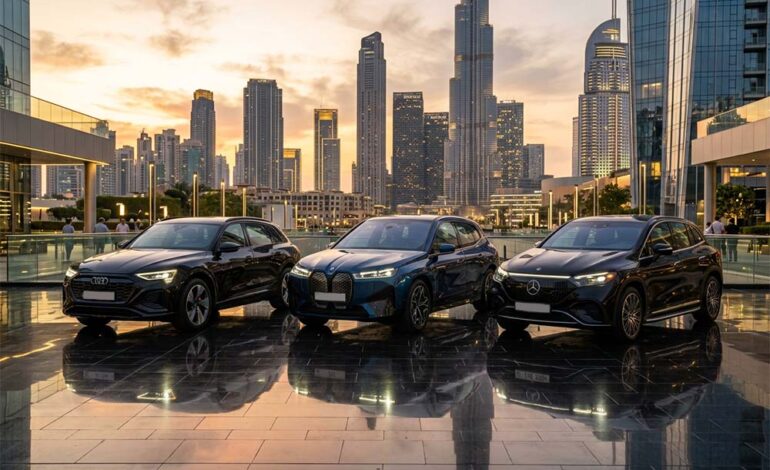
Audi, BMW and Mercedes-Benz now offer credible electric cars in the UAE, but they are not equally convincing for every buyer.
BMW currently makes the strongest all-round case through the iX. It combines a long official driving range, a spacious luxury cabin and the confidence of a model that has already spent several years in the market. Audi’s latest e-tron products, particularly the Q6 e-tron and A6 e-tron, have the most modern charging architecture of the three brands. Mercedes-Benz counters with the widest electric line-up, extending from the EQA and EQB to the EQE SUV and seven-seat EQS SUV.
The practical winner depends on the buyer. BMW suits those wanting one polished electric luxury SUV. Audi has the strongest argument for buyers prioritising fast charging and newer electrical technology. Mercedes offers the broadest choice and some of the most indulgent cabins, but its model range can be harder to navigate.
For UAE owners, however, the badge and claimed range are only the beginning. Summer efficiency, home charging, insurance, battery warranty, dealer support and future resale value may matter far more than the acceleration figure quoted in a brochure.
German luxury EVs have moved beyond the experimental stage
The first premium electric cars often felt like expensive demonstrations of what might be possible. Some had limited range, compromised luggage space or unfamiliar controls that made them less convenient than their petrol equivalents.
That has changed. Audi, BMW and Mercedes-Benz now offer electric vehicles built on dedicated or highly developed EV platforms, with larger batteries, improved thermal management and stronger public charging capability.
Their UAE line-ups also cover several types of buyer:
- Audi’s current electric range is centred on newer e-tron models such as the Q6 e-tron and A6 e-tron. Audi Dubai lists the Q6 e-tron as available from AED 329,900, while also promoting the A6 Sportback e-tron and performance-focused S6 Sportback e-tron. The older Q8 e-tron may still appear in market discussions, but buyers should verify new-stock availability because Audi’s current UAE focus has moved towards its newer PPE-based products.
- BMW’s electric range stretches beyond the flagship iX. UAE customers can also consider the iX1, iX2 and iX3, but the iX remains BMW’s clearest rival to the larger Mercedes EQ SUVs. It was designed as an electric model from the beginning rather than adapted from a petrol SUV.
- Mercedes-Benz offers the broadest spread of electric luxury vehicles. Its Dubai line-up includes the EQA, EQB, EQE, EQE SUV, EQS and EQS SUV. That gives Mercedes a stronger choice of body styles and price positions, although exact transaction prices and local stock vary.
The question is therefore no longer whether a German luxury EV can work in the UAE. It is which manufacturer has created the most complete ownership proposition.
BMW iX makes the strongest all-round argument
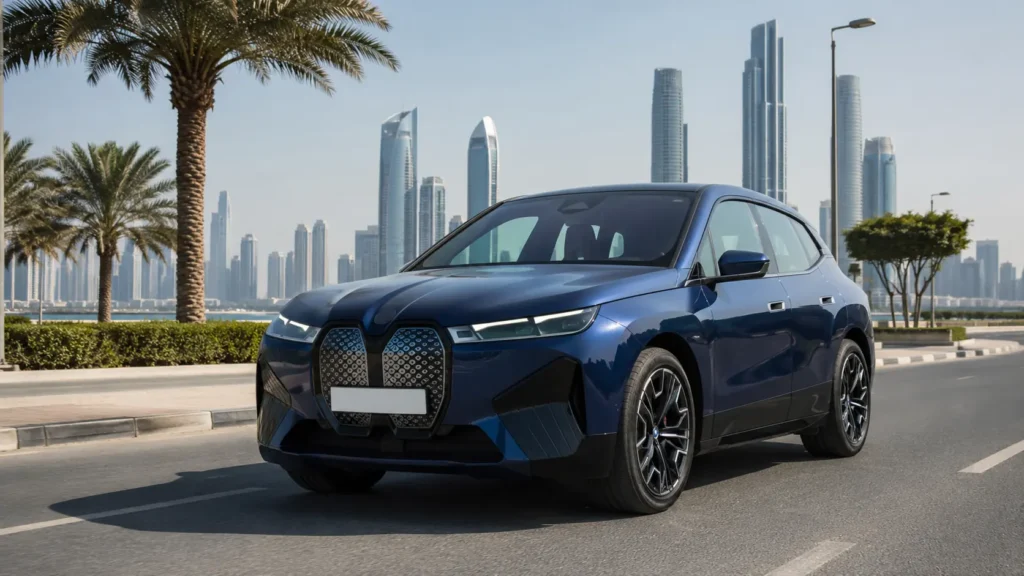
The BMW iX is arguably the safest recommendation of the three for buyers seeking a large electric luxury SUV without a specific brand preference.
It combines a spacious five-seat cabin with powerful dual-motor versions, a substantial battery and a driving experience that still feels recognisably BMW. The updated model introduced in 2025 also improved range, efficiency and performance.
Depending on version and market specification, BMW quotes a WLTP range extending from approximately 490km to more than 680km. BMW’s UK announcement listed up to 426 miles, or around 685km, for the iX xDrive60 under the WLTP procedure. UAE specifications may differ according to wheels, equipment and final model allocation, so buyers should confirm the figure attached to the exact vehicle.
The iX feels developed as one complete vehicle
The iX does not resemble a conventional BMW SUV with an electric powertrain inserted beneath it. Its flat floor, open cabin and unusual interior materials give it a distinct character.
That dedicated design brings practical benefits. Rear passenger space is generous, the absence of a large transmission tunnel improves cabin movement and the high seating position suits UAE family use.
BMW’s approach also places less emphasis on filling the dashboard with separate screens than Mercedes. The cabin remains highly digital, but it often feels calmer and easier to understand than the most elaborate EQ interiors.
Range gives the BMW a valuable UAE advantage
Long-distance efficiency matters in a country where owners may regularly travel between Dubai, Abu Dhabi, Al Ain and the Northern Emirates.
A high official range does not guarantee the same result in Gulf summer conditions. Air-conditioning, high motorway speeds, large wheels and battery temperature can reduce the distance achieved from a charge. Even so, a larger range margin gives the owner more flexibility when those losses occur.
The BMW argument is strongest for several buyer types:
- It suits luxury SUV owners moving from petrol to electric for the first time. The iX feels substantial, quiet and powerful without asking the driver to learn an entirely different type of vehicle. Its driving position and motorway stability should feel familiar to owners of an X5 or similar premium SUV.
- It works well for drivers covering frequent inter-emirate journeys. The longer-range versions reduce dependence on public charging during ordinary Dubai to Abu Dhabi travel. Home charging would still make the ownership experience considerably easier.
- It appeals to buyers who place driving quality above visual drama. The iX is fast and technologically advanced, but its main strength is the way its comfort, performance and controls operate together. Buyers who dislike the exterior design may still find the ownership proposition difficult to ignore.
The main weakness is that the iX remains expensive, particularly in higher specifications. It is also a five-seat SUV, so it cannot replace a seven-seat family vehicle for larger households.
Audi’s latest e-tron models have the stronger charging story
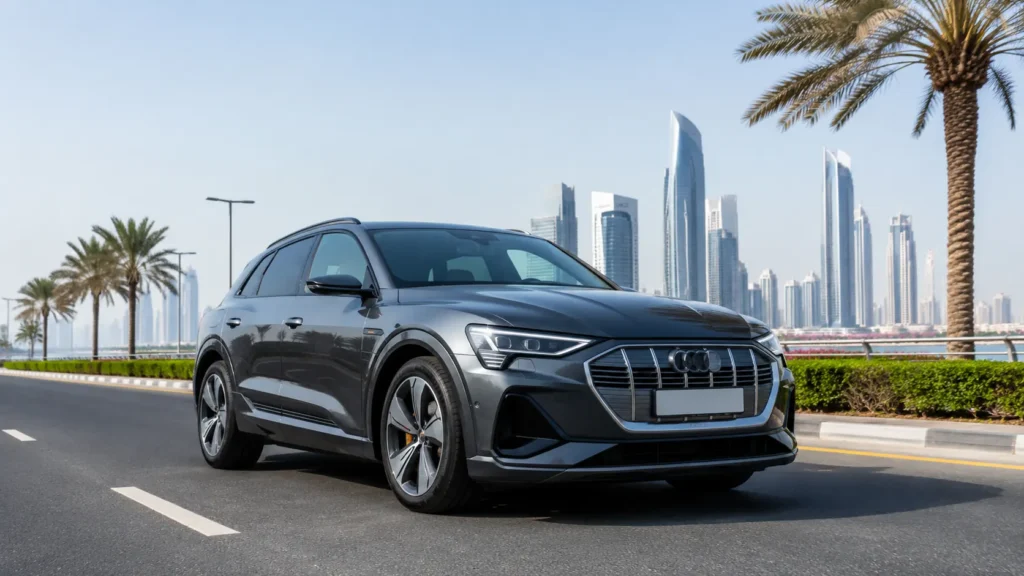
Audi’s original e-tron SUV helped establish the brand in the premium EV segment, but the latest Q6 e-tron represents a more important technical step.
The Q6 e-tron is built on the Premium Platform Electric, developed around an 800-volt electrical system. Audi says the Q6 e-tron performance version can achieve up to 641km under WLTP testing, using a 100kWh gross battery with 94.9kWh usable capacity.
The 800-volt architecture allows high charging power when the vehicle is connected to a compatible rapid charger. That can shorten charging stops on longer journeys, although the advertised maximum will only be achieved when the battery temperature, state of charge and charging station are suitable.
Q6 e-tron is more relevant than the old Q8 e-tron debate
Many buyers still use “Audi e-tron” to describe one specific large SUV. Audi now uses e-tron as a wider electric sub-brand across several models.
For a current UAE comparison, the Q6 e-tron is more relevant than relying only on the older Q8 e-tron. Audi Dubai identifies the Q6 e-tron as available, alongside the A6 and S6 Sportback e-tron.
The Q6 is smaller than the BMW iX and Mercedes EQS SUV, so this is not a perfectly equal size comparison. Its significance lies in its newer platform, strong claimed range and modern charging capability.
Fast charging could matter more than outright power
Electric cars already provide more than enough acceleration for UAE traffic. The difference between a very fast EV and an extremely fast one has limited value during normal ownership.
Charging performance can have a much greater effect on the driver’s routine. A vehicle that accepts high power consistently may be easier to use on a long journey than one with a larger battery but slower charging.
Audi has a persuasive case for buyers who value the following:
- The Q6 e-tron uses one of the newest EV platforms in the German premium segment. Its battery, charging system and electronic architecture were developed together rather than carried over from an earlier electric generation. That gives Audi a stronger technical foundation for future models.
- Its claimed WLTP range is competitive without requiring the largest SUV body. Up to 641km provides a useful theoretical margin for motorway travel, although UAE heat and equipment choices will affect the real result. The rear-wheel-drive performance version achieves the longest quoted range, while quattro versions may trade some efficiency for all-wheel-drive traction.
- The current UAE starting price places it below many flagship electric SUVs. Audi Dubai lists the Q6 e-tron from AED 329,900. The final value depends heavily on trim, options, warranty coverage and any charging or service package included in the transaction.
Audi’s weakness is that its electric SUV line-up is in transition. Buyers need to understand the difference between older e-tron vehicles and the newer Q6 platform. Used values, parts availability and software support may also differ considerably between generations.
Mercedes EQ still has the widest answer to the question
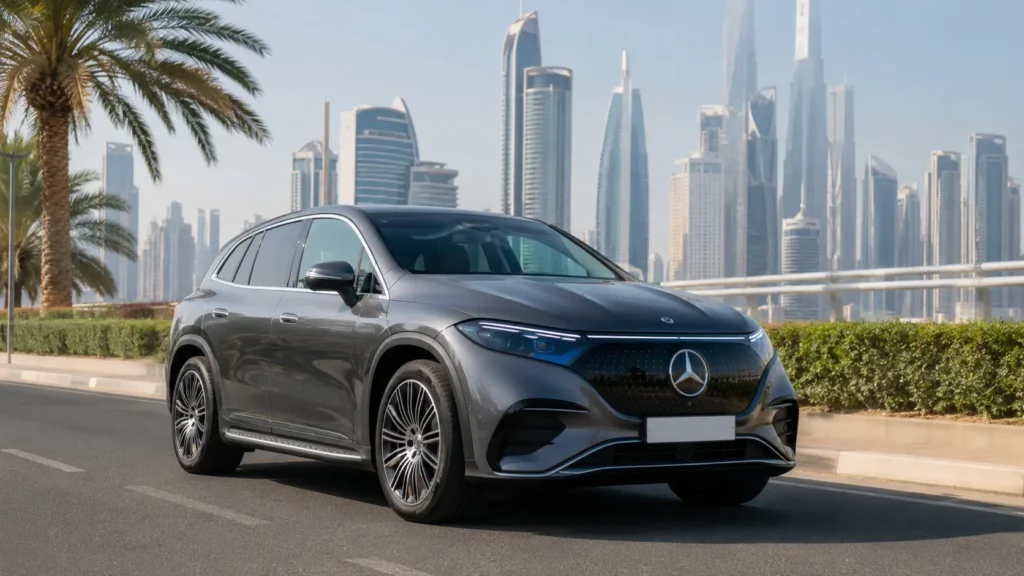
Mercedes-Benz approaches the UAE electric market with variety.
A buyer can choose a compact EQA, a family-oriented EQB, the more aerodynamic EQE and EQS saloons, or larger EQE SUV and EQS SUV models. Mercedes Dubai lists official WLTP figures of up to 551km for the EQE SUV and 616km for the EQS SUV.
That range of products means Mercedes is not relying on one electric flagship to represent the entire brand.
EQS SUV brings the strongest luxury and family argument
The EQS SUV is the Mercedes option most likely to appeal to buyers who would otherwise consider a GLS or another full-size luxury family SUV.
It offers three-row capability in certain configurations, an exceptionally quiet cabin and the screen-led interior design associated with the EQ range. For owners prioritising passenger comfort rather than steering feel, it can make a stronger case than the BMW iX.
Mercedes also has an established UAE dealer structure. Gargash represents the brand in Dubai, Sharjah and the Northern Emirates, while Emirates Motor Company operates in Abu Dhabi. Gargash states that it has five dealerships and five workshops across its region.
EQE SUV offers a more manageable middle ground
The EQE SUV is closer in concept to the BMW iX, although packaging, styling and trim positioning differ.
Mercedes quotes up to 551km of WLTP range for the EQE SUV through its Dubai electric-model page. It may appeal to buyers who want Mercedes cabin luxury without the size and likely cost of the EQS SUV.
Mercedes has several strong points:
- Its electric range covers more buyer types than Audi or BMW. The EQB can accommodate family use at a smaller size, while the EQS SUV sits at the flagship end. This makes it easier for a loyal Mercedes customer to find an EV close to their existing budget and space requirements.
- Passenger comfort remains a central priority. Mercedes EQ models generally place strong emphasis on quietness, ambient lighting, seat comfort and cabin theatre. That suits chauffeur-driven customers and UAE families that view the cabin as more important than handling precision.
- Local EV warranty support is clearly visible. Gargash advertises an extended warranty programme for eligible all-electric Mercedes-Benz vehicles maintained within its authorised network, with coverage stated as up to eight years or 160,000km depending on the model. Buyers must examine the exact conditions because eligibility, exclusions and battery terms can vary.
Mercedes’ challenge is that the EQ line-up can feel fragmented. EQA, EQB, EQE, EQE SUV, EQS and EQS SUV names are logical within the company, but less intuitive for new buyers than one clearly defined electric flagship.
What makes this German EV debate different in the UAE?
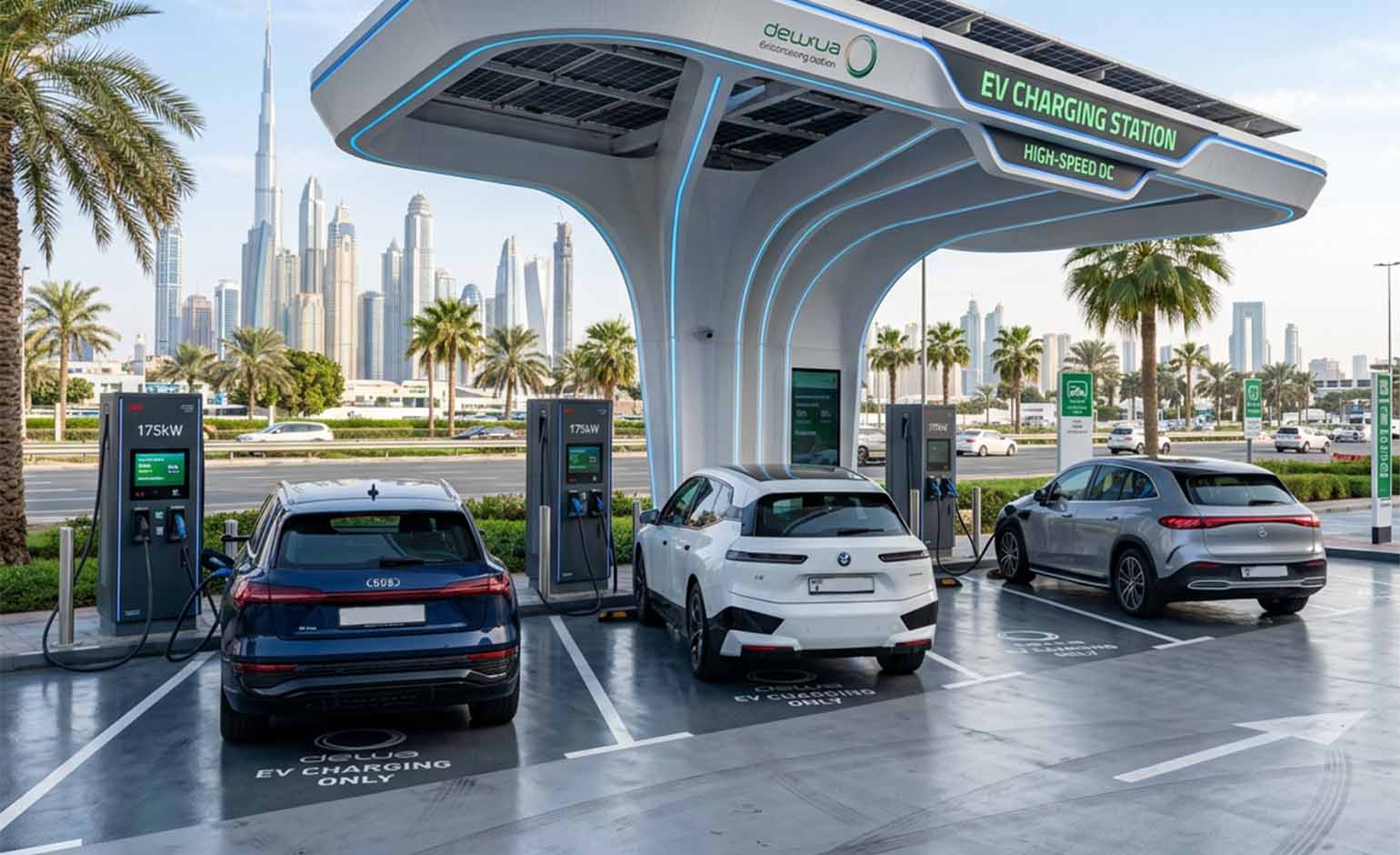
Official European range figures are useful for comparison, but they do not describe the entire UAE ownership experience.
A car achieving a particular WLTP figure in moderate test conditions may travel significantly less far during a Gulf summer, especially when driven at sustained motorway speeds with the air-conditioning working continuously.
Heat changes both range and charging behaviour
High ambient temperatures increase the energy needed to cool the cabin and can require active battery cooling.
Modern EVs protect their batteries through thermal-management systems. This does not mean heat has no effect. Charging speed may be reduced when the battery is outside its preferred temperature range, while repeated outdoor parking can increase cooling demand before a journey even begins.
Buyers should compare more than the largest published range number:
- Ask for expected summer motorway consumption rather than relying only on WLTP range. A realistic Dubai to Abu Dhabi drive can reveal more than a brochure. Dealers should be willing to explain how wheel size, speed and climate use affect the result.
- Test the car after it has been parked outside. Air-conditioning should cool the cabin quickly without producing warnings or obvious performance restrictions. Rear-seat cooling is especially important in large glass-roof SUVs.
- Check whether battery preconditioning works with the navigation system. Preconditioning can help the vehicle reach a suitable battery temperature before rapid charging. The process and charger integration may vary between brands and software versions.
Home charging remains the real dividing line
Dubai’s charging network continues to expand through DEWA’s EV Green Charger initiative, and official charger locations are available through DEWA’s website and applications. Guest charging is also supported without requiring a permanently registered EV account.
Public infrastructure helps, but a luxury EV becomes far easier to own when it can be charged overnight at home.
Villa residents with a correctly installed wallbox can begin most days with a useful state of charge. Apartment residents may depend on shared chargers, workplace facilities or public stations, which can create waiting time and uncertainty.
None of the three German brands can solve a poor charging setup with a larger battery alone.
Insurance and repair costs could surprise buyers
An electric motor has fewer routine service items than a petrol engine, but luxury EV repair costs can still be high.
A minor collision may involve battery-protection structures, active grille systems, cameras, radar sensors, expensive lighting and large alloy wheels. Panoramic roofs and advanced displays add further replacement exposure.
Before choosing a brand, buyers should ask insurers about:
- agency repair eligibility;
- battery damage and underbody exclusions;
- charger and cable coverage;
- roadside recovery for an empty battery;
- agreed value or market value settlement;
- depreciation applied to expensive electronic components.
The cheapest annual policy may not provide the most useful cover when a complex repair is required.
h both Gargash and Emirates Motor Company. BMW and Audi buyers should request the corresponding warranty booklet for the exact chassis and model year before purchase rather than relying on a salesperson’s summary.
The most useful questions include:
- Who diagnoses and repairs the high-voltage battery? Confirm whether the work is completed locally and which service centre has the necessary equipment. A long warranty is less convenient if major repairs require extended parts or technical approval delays.
- Is a replacement vehicle supplied during warranty repairs? Premium EV parts can sometimes take time to arrive. Written mobility support is more valuable than a verbal assurance made during the sale.
- Does the service package transfer to the next owner? Transferable coverage can improve resale confidence. Buyers should also check whether missing one scheduled inspection can affect battery or drivetrain claims.
Resale value remains the hardest part to judge
The UAE used-EV market is developing quickly, but depreciation remains less predictable than it is for established petrol models.
Rapid battery improvements can make an older EV appear less competitive even when it remains mechanically healthy. Manufacturer discounts on new vehicles can also reduce the value of nearly new examples.
German luxury EVs face an additional challenge because their original prices are high. A modest percentage loss can represent a large amount of money.
Each brand carries a different resale argument:
- BMW iX has the benefit of a clear identity and an established market presence. Buyers understand what it is, and the updated model remains recognisably connected to the original. Its unusual design may narrow the buyer pool, but strong range figures can support continued interest.
- Audi’s newer Q6 e-tron platform may age better technologically than older e-tron products. The 800-volt charging architecture gives it a more current specification. However, the transition between e-tron generations could make older Audi EV values harder to predict.
- Mercedes offers strong badge recognition but a crowded EQ range. Used buyers must understand the difference between similarly named models and specifications. High original option prices may not be recovered at resale.
A buyer expecting to change cars within two or three years should request guaranteed future value or finance settlement information where available. Someone keeping the vehicle for six to eight years may care more about battery warranty and long-term parts support.
Who should choose Audi, BMW or Mercedes?
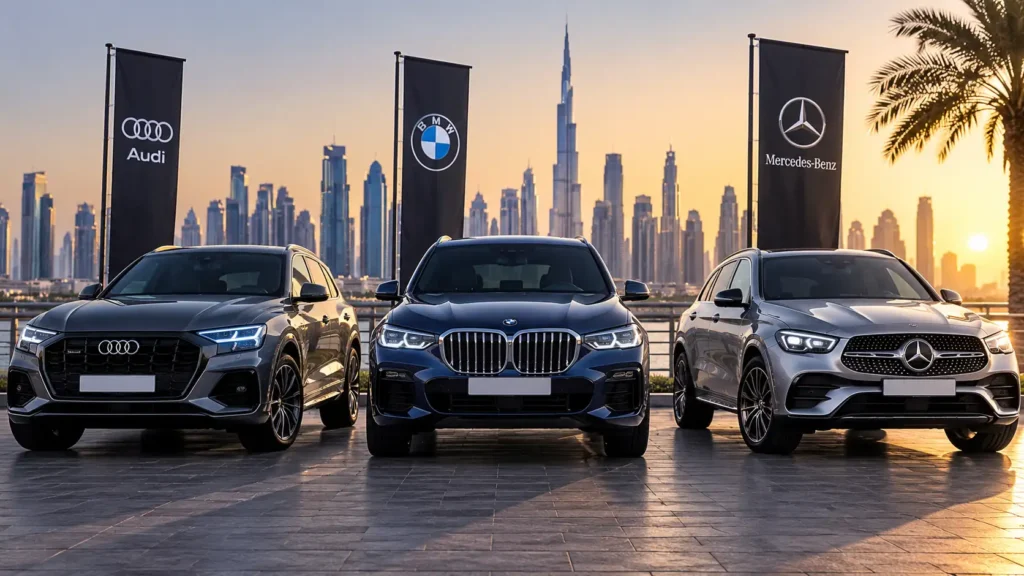
There is no single German EV brand that wins every category. The choice becomes clearer when matched to the owner’s priorities.
Choose the BMW iX for the most complete all-round package
The iX is the strongest option for buyers who want a large, refined, long-range electric SUV and do not need seven seats.
It has a mature driving experience, excellent cabin space and highly competitive official range in its updated versions. Its combination of comfort and driver engagement is difficult for either rival to match as consistently.
It makes the most sense for:
- regular Dubai to Abu Dhabi drivers;
- five-seat luxury SUV households;
- existing BMW owners seeking an electric replacement;
- buyers prioritising range and road behaviour;
- owners with reliable home charging.
Choose Audi e-tron for newer charging technology
Audi deserves serious consideration from buyers focused on modern EV architecture and rapid charging.
The Q6 e-tron may not be as large or lavish as the BMW iX or Mercedes EQS SUV, but its PPE platform, 800-volt system and competitive range make it technologically relevant.
It makes the most sense for:
- buyers wanting a more manageable premium electric SUV;
- owners who regularly use compatible high-power chargers;
- drivers attracted to a restrained, conventional luxury design;
- technology-focused buyers considering the latest EV generation;
- customers who find the iX too visually unconventional.
Choose Mercedes EQ for cabin luxury and model choice
Mercedes is the strongest choice for buyers who want variety or require a larger, more passenger-focused vehicle.
The EQE SUV offers the more manageable package, while the EQS SUV provides stronger flagship and family credentials. The EQB may also suit customers needing a smaller electric family vehicle.
It makes the most sense for:
- chauffeur-driven or comfort-focused owners;
- buyers seeking three-row capability;
- loyal Mercedes customers wanting several EV sizes;
- families prioritising rear passenger space and cabin atmosphere;
- customers who value a visible UAE dealer and extended-warranty structure.
The best German EV is the one supported by the right ownership setup
BMW currently has the narrow lead for the typical UAE luxury EV buyer. The iX provides the most convincing combination of range, comfort, space and established market experience.
Audi may have the better technical platform. The Q6 e-tron’s 800-volt system and charging capability make it particularly attractive to drivers who understand how and where they will use rapid charging.
Mercedes wins on choice and luxury. Its EQ range covers more body styles, and the EQS SUV remains the clearest German electric answer for buyers needing a large, premium family vehicle.
Yet none is automatically ready for every UAE buyer. A BMW iX without dependable charging can be less convenient than a petrol SUV. An Audi Q6 e-tron’s charging advantage means little if the owner only uses slow public chargers. A Mercedes EQS SUV can become financially difficult if insurance, depreciation and out-of-warranty repairs were ignored at purchase.
The practical decision is to choose the car only after confirming home charging, summer range, battery warranty, insurance terms and local service support. Among these three brands, BMW offers the strongest all-round answer today, but Audi and Mercedes can be the better choice when the buyer’s priorities are more specific.