UAE Summer Road Trip Car Checks: What to Inspect Before You Leave
A long summer drive in the UAE can be deceptively easy to plan. Put a destination into the navigation system, fill the tank or charge the battery, load the family and leave. The car, however, is being asked to work in conditions that expose weak tyres, tired batteries, marginal cooling systems and neglected fluids much faster than an ordinary urban commute.
That is why UAE summer road trip car checks should go beyond a quick glance at the fuel gauge. Before a run from Dubai to Abu Dhabi, Al Ain, Hatta, Ras Al Khaimah or the Western Region, check tyre pressure and condition, coolant and engine oil, battery health, brakes, air-conditioning, lights, wipers and emergency equipment. EV drivers should add charging plans and thermal-management checks to the list.
The advice is timely. On 10 June 2026, Dubai’s Roads and Transport Authority urged motorists to carry out periodic vehicle inspections and summer maintenance, specifically pointing to cooling systems, tyre pressure, brakes, fluids, air-conditioning and visibility. Abu Dhabi Police followed with summer guidance on 27 June 2026 calling for pre-trip inspections, correct fluid levels, safe tyres and appropriate safety equipment.
Summer exposes problems that city driving can hide
A car that feels perfectly normal on short journeys around Dubai Marina, Downtown Dubai or central Abu Dhabi can behave differently after an hour or two on the E11, E311 or E611. Sustained speed keeps the tyres, cooling system and drivetrain working continuously, while a heavily loaded cabin puts more demand on the air-conditioning and the vehicle as a whole.
The UAE’s heat and dust also change the risk profile. RTA’s 2026 summer campaign said high temperatures and humidity place greater demands on cooling systems and tyre pressure, while Abu Dhabi Police has repeatedly focused its summer road-safety work on damaged, incorrectly inflated and unsuitable tyres.
This does not mean every summer journey requires a workshop visit. It means small warning signs should be dealt with before the car is packed. A coolant smell, slow engine cranking, a tyre-pressure warning that keeps returning or a brake vibration is far easier to investigate near home than on a hot roadside outside the city.
UAE summer road trip car checks should start with the tyres
Tyres carry the vehicle’s full load and are the only parts of the car that remain in contact with the road. On a summer road trip, they may also be carrying more passengers, luggage and sustained highway speed than they see during a normal working week.
Check pressure when the tyres are cold
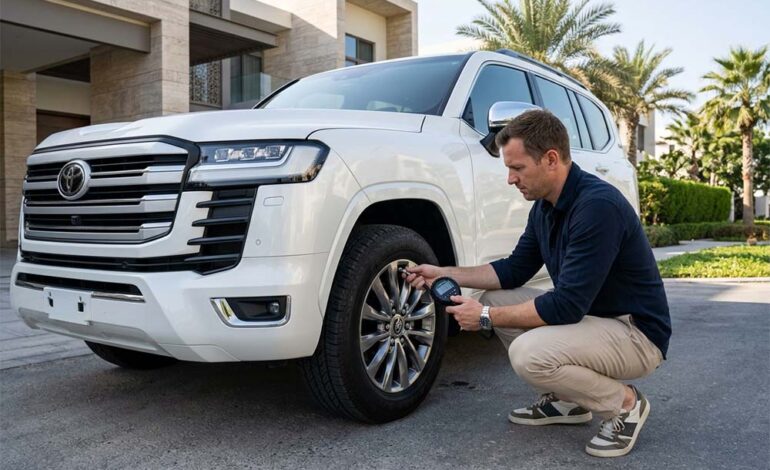
Use the pressure specified by the vehicle manufacturer, normally shown on a placard in the driver’s door area or in the owner’s manual. Check before the car has been driven a meaningful distance, because pressure rises as the tyre heats up and a hot reading can mislead you.
Do not deliberately lower tyre pressure because the weather is hot. The correct starting point is the manufacturer’s cold-pressure recommendation for the load and tyre size fitted to the car. If the vehicle has different settings for a full passenger or luggage load, use the relevant figure.
A tyre-pressure monitoring system is useful, but it should not replace a manual check. It may warn about a significant pressure loss, yet it cannot tell you whether the sidewall is cracked, a nail is embedded in the tread or the spare tyre is flat.
Look beyond tread depth
Inspect all four tyres for cuts, cracking, bulges, exposed cords, uneven wear and objects in the tread. Pay particular attention to the inner shoulders, which are easy to miss when the car is parked normally.
Age matters as well. RTA’s current vehicle-renewal guidance states that tyres are valid for a maximum of five years from the date of manufacture for technical-inspection purposes, but it also makes clear that damaged tyres must be replaced sooner. Five years should therefore be treated as a maximum regulatory reference, not a promise that every tyre remains safe until that date.
Do not forget the spare, repair kit and vehicle load
If the car has a full-size or space-saver spare, check its pressure and make sure the jack, wheel brace and locking-wheel-nut key are actually in the vehicle. If it uses a puncture-repair kit instead, check the sealant expiry date and learn how the compressor works before the trip.
Luggage matters too. A seven-seat SUV loaded with passengers, suitcases, a roof box and camping equipment asks more of its tyres and brakes than the same vehicle carrying one driver. Keep within the vehicle’s stated load limits and secure heavy items so they cannot move under braking.
Cooling system and fluids deserve a proper pre-trip check
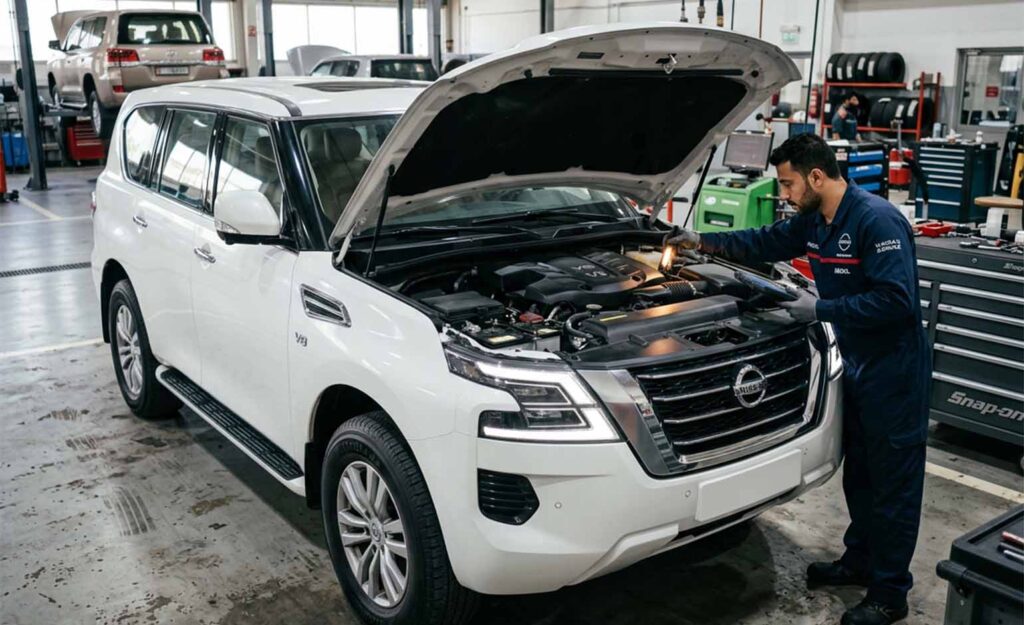
The cooling system is what keeps an internal-combustion engine within its intended operating temperature range. A small leak, weak hose, tired radiator fan or low coolant level may not show itself during a ten-minute commute, but a long summer run can expose the problem quickly.
RTA specifically advises drivers to monitor engine oil and coolant during summer, and Abu Dhabi Police’s 2026 guidance also lists fluid checks before setting off.
Before travelling, work through the main fluid-related items rather than simply looking for dashboard warnings:
- Coolant: Check the reservoir level only when the engine is cold and look around the engine bay and beneath the car for signs of leakage. If the temperature gauge has been fluctuating, coolant has needed repeated top-ups or a warning has appeared, get the cause diagnosed before the trip.
- Engine oil: Confirm the oil level using the method specified for the vehicle, whether that is a dipstick or electronic measurement. If a scheduled oil change is already due or very close, doing it before a long summer journey is more sensible than stretching the interval.
- Brake fluid and other service fluids: Check for warning lights and any obvious low-fluid indications, but do not treat topping up as a cure for an unexplained loss. A falling brake-fluid level, for example, can be linked to pad wear or a leak and deserves professional inspection.
- Screenwash: A clean windscreen matters in dusty Gulf conditions, especially when sun glare is strong or sand has built up on the glass. Fill the washer reservoir and confirm the jets work properly before leaving.
If the engine temperature climbs abnormally while driving, get to a safe place, stop and switch off the engine. Abu Dhabi Police has specifically advised motorists to stop safely when engine temperature rises above normal. Do not open a pressurised cooling-system cap while the engine is hot.
A weak 12-volt battery can end the trip before it starts
Hot weather is hard on conventional lead-acid starter batteries. AAA’s technical guidance identifies heat as one of the major factors that accelerates battery degradation, noting that high under-bonnet temperatures speed up deterioration.
That makes a battery check especially worthwhile if the car has shown any warning signs. A workshop load test or conductance test can reveal a weakening battery that still manages to start the engine during ordinary use.
Watch for these signs before committing to a long drive:
- Slow or uneven cranking: If the starter sounds noticeably slower first thing in the morning, do not assume it will survive another long trip. Heat, age and repeated short journeys can leave a marginal battery with little reserve.
- Corrosion or a swollen case: Visible corrosion around the terminals should be inspected and cleaned correctly, while a damaged or distorted battery case needs professional attention. Also make sure the battery is securely mounted rather than able to vibrate.
- Electrical warnings: A battery light, repeated low-voltage messages or flickering electrical systems can point to a battery or charging-system fault. Test the charging system rather than simply replacing the battery on guesswork.
For EVs and hybrids, the traction battery gets most of the attention, but many models still depend on a separate 12-volt system to wake up computers, contactors and accessories. A healthy high-voltage battery does not automatically mean the 12-volt system is healthy.
Air-conditioning is part of summer road-trip readiness
In the Gulf, working air-conditioning is more than a comfort feature on a long family journey. RTA’s June 2026 summer guidance explicitly tells motorists to ensure the system is operating efficiently in hot weather.
If the system takes unusually long to cool, becomes warm at idle, makes new noises or has weak airflow even at a high fan setting, have it checked before leaving. The cause could be as simple as a restricted cabin filter or as involved as a refrigerant, condenser, compressor or cooling-fan issue.
A clogged cabin filter is particularly relevant in dusty UAE conditions. It can reduce airflow through the vents even when the refrigeration side of the air-conditioning system is functioning properly. For family trips, also test the rear vents and separate rear climate controls if the vehicle has them.
Visibility checks matter when dust and glare arrive
A summer road trip can move through very different conditions in a few hours. Bright sun, haze, dusty winds and the grime thrown onto the windscreen by traffic can all reduce visibility.
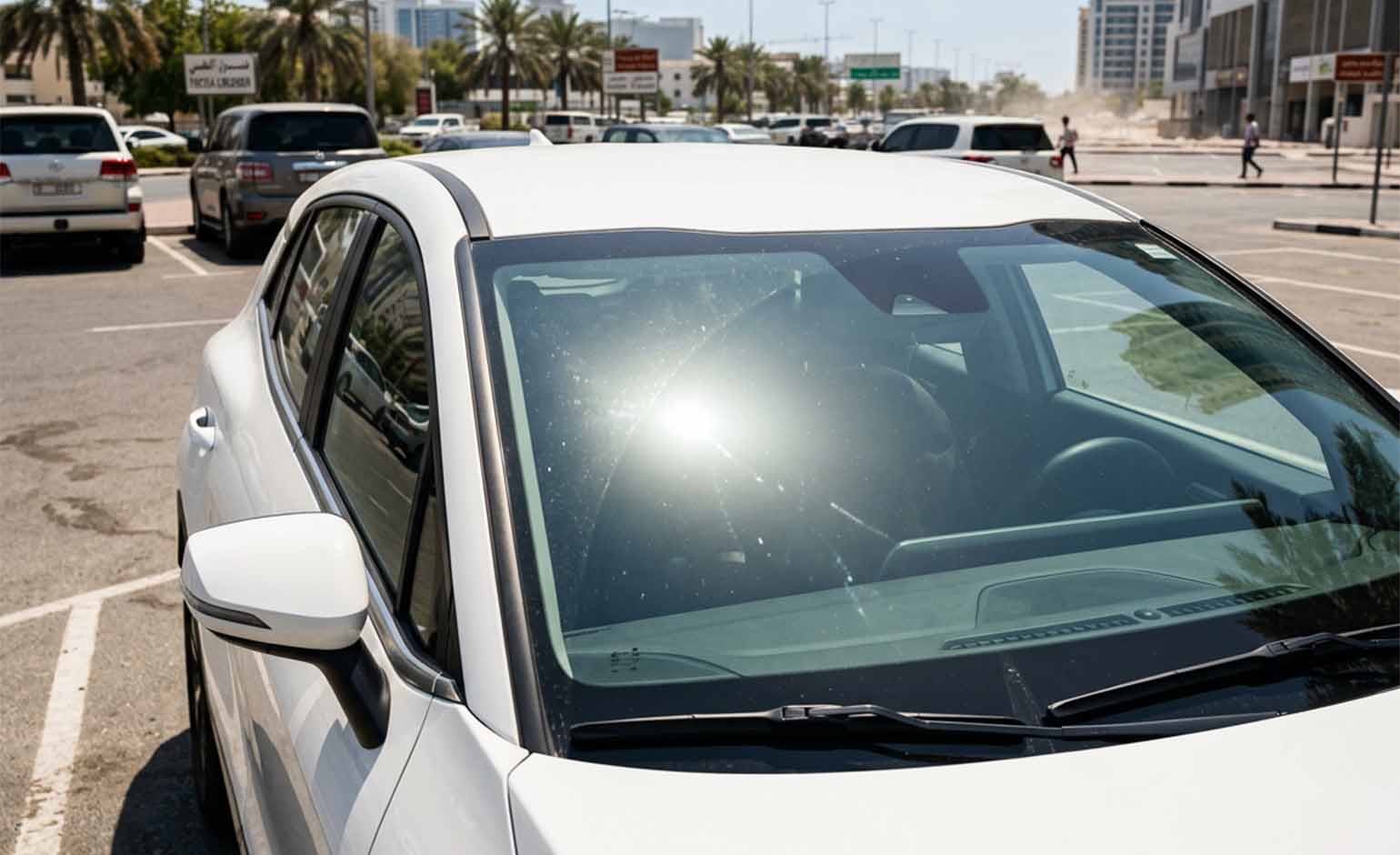
RTA’s current guidance says the windscreen, rear window and lights should be kept clean and clear. Before departure, clean the glass inside and out, check the wiper blades for hardening or splits, test the washers and confirm the headlamps, brake lights, indicators and hazard lights all operate correctly.
Do not ignore a badly pitted windscreen either. Fine damage that is tolerable at night can create distracting glare when the sun is low, particularly during early morning or late afternoon driving.
Brakes and suspension need extra attention before mountain routes
Highway mileage is only part of the road-trip picture in the UAE. Routes towards Jebel Jais, Jebel Hafeet and other elevated or winding areas place more repeated demand on the brakes than a flat motorway run.
RTA’s summer campaign specifically includes brake-system inspection among its recommendations. If the pedal pulses, the steering shakes under braking, the car pulls to one side, a scraping noise is present or the brake warning light is on, do not leave the issue for after the holiday.
Suspension and steering faults can also become more obvious with a full passenger load. Uneven tyre wear, wandering at motorway speed, clunks over bumps or excessive vibration deserve inspection, as they may indicate alignment, wheel-balance, bush, bearing or suspension problems.
EV road trips need the same mechanical checks plus a charging plan

Electric cars remove engine oil, spark plugs and conventional engine cooling from the checklist, but they do not remove tyres, brakes, air-conditioning, low-voltage systems or thermal management. In very hot weather, the car may use energy to cool the cabin and manage battery temperature, so drivers should plan with a sensible range margin rather than relying on the most optimistic dashboard estimate.
Charging infrastructure is expanding quickly. DEWA reported in June 2026 that its EV Green Charger network had reached more than 2,223 charging points across Dubai, including stations licensed in collaboration with government and private-sector entities. ADNOC Distribution also opened a 60-point fast-charging hub at Saih Shuaib on the E11 between Dubai and Abu Dhabi in January 2026.
There is an important distinction between what exists and what has been announced. ADNOC Distribution said it expected 15 highway charging hubs to open during 2026 as part of a wider plan for 20 by the end of 2027, but a roadmap is not the same as live availability. Before a long EV journey, check the operator’s official app or website for the charger location, connector type and current status rather than planning around an announced site that may not yet be operational.
EV drivers should also make three simple checks: confirm the charging cable or adaptor needed for the planned stops, inspect tyres with the same care as any other car, and make sure the vehicle has no unresolved battery-cooling or charging warnings.
Pack for a breakdown, not just the destination
Abu Dhabi Police’s June 2026 guidance asks drivers to make sure appropriate safety tools are in the vehicle before setting off. That is sensible even for a modern car with roadside assistance because a breakdown may still leave occupants waiting in high temperatures.
A useful road-trip kit should match the car and route:
- Warning and visibility equipment: Carry the warning equipment required for the vehicle, plus a reflective vest and working torch. If you have to stop, prioritise getting the vehicle and occupants to a safe location away from live traffic whenever possible.
- Tyre equipment: Keep the correct jack, wheel tools, locking-wheel key, inflator or manufacturer-supplied repair kit on board. Owning the equipment is not enough if the sealant is expired or the locking-wheel key was left at home.
- Water and phone power: Carry drinking water and keep phones charged, with a cable or power bank available. This is especially sensible for long runs through less built-up areas such as parts of Al Dhafra.
- Roadside-assistance details: Save the number for the manufacturer’s assistance service, insurer or recovery provider rather than relying on finding it after a breakdown. Check what your policy or warranty actually covers, particularly towing distance and off-road recovery if that is relevant to the trip.
- Documents: Confirm vehicle registration, driving licence and insurance are valid before departure. If the journey continues beyond the UAE into another GCC country, verify cross-border insurance, vehicle-authorisation and entry requirements with the relevant authorities and insurer because the requirements are not identical across borders.
RTA’s vehicle-inspection service describes technical inspection as a roadworthiness check for registration and renewal in Dubai. A recently passed inspection is useful reassurance, but it is not a substitute for a pre-trip check because tyre damage, fluid loss or battery weakness can develop after the test.
Give the car one final walk-around on departure morning
Even after a workshop inspection, a five-minute check on the day of travel can catch problems that developed overnight. Look under the car for fresh fluid, scan all four tyres, make sure no warning lights remain on after start-up and confirm the air-conditioning settles into normal operation.
Before joining the motorway, pay attention to how the car feels at lower speed. New vibration, steering pull, brake noise or a temperature warning deserves investigation rather than a hope that it will disappear once the journey is under way.
If the car is heavily loaded, take an extra moment to confirm luggage is secure and rear visibility is not unnecessarily blocked. On SUVs and crossovers, check that roof-mounted luggage is properly fixed and remains within the vehicle and accessory manufacturer’s stated limits.
The best UAE summer road trips start with a car that is not being asked to prove anything

The point of a pre-trip inspection is not to turn every journey into a workshop exercise. It is to remove obvious risks before heat, speed, distance and extra load make them harder to manage.
A healthy set of tyres, stable coolant level, strong battery, effective brakes, working air-conditioning and a realistic fuel or charging plan cover most of the preventable problems drivers can identify before leaving. In UAE summer conditions, that preparation is far more useful than discovering a weak component on the hard shoulder with a fully loaded car.