Saudi Arabia Temporarily Blocks Vehicle Imports From 29 Manufacturers Over Fuel Economy Rules

Saudi Arabia has temporarily stopped new vehicles from 29 automobile manufacturers entering the Kingdom after the companies failed to submit their required 2026 supply plans on time.
The Saudi Standards, Metrology and Quality Organization, known as SASO, issued the restriction as part of its enforcement of the Saudi Corporate Average Fuel Economy standard. The measure applies to new light vehicles weighing no more than 3.5 tonnes and will remain in place until the manufacturers complete the required submissions.
The decision was reported on 17 June 2026 and affects vehicle imports rather than cars that have already been registered or are currently being driven in Saudi Arabia.
Saudi Arabia blocks 29 vehicle manufacturers from importing new cars
SASO requires vehicle manufacturers supplying the Saudi market to provide annual plans showing the vehicles they intend to import. These submissions allow the authority to assess each manufacturer’s planned model range against the Kingdom’s fleet-wide fuel economy requirements.
The latest restriction was introduced because 29 manufacturers did not submit their 2026 plans within the designated period. SASO has set the end of 2026 as the final deadline, although an affected manufacturer may be able to resume imports earlier once its documentation has been completed and accepted.
The confirmed scope of the announcement includes:
- The restriction covers new light vehicles weighing up to 3.5 tonnes. This includes many passenger cars, crossovers, SUVs and light commercial vehicles. Heavy trucks and vehicles outside the stated weight category were not identified as part of this particular decision.
- The measure is temporary rather than a permanent brand ban. Imports can resume when the relevant manufacturer submits the required 2026 supply plan and meets the associated regulatory requirements. The announcement does not state that every vehicle produced by the affected companies has failed an individual fuel economy test.
- Existing owners are not being told to stop driving their vehicles. The action controls the entry of new vehicles into Saudi Arabia. SASO did not announce a registration cancellation, road-use prohibition or recall covering vehicles already owned by customers.
Only part of the affected manufacturer list has been publicly detailed
Regional reports named several companies included in the restriction, but the complete list of all 29 manufacturers was not reproduced in the reports reviewed for this article.
Manufacturers identified in the announcement
The companies publicly named include Luxgen Motor, Volvo Cars, Hozon New Energy Automobile, Zhengzhou Nissan Automobile, Hawtai Motor Group, Greenkar Auto Tech and Chongqing Livan Automobile Manufacturing.
Some of these are manufacturer-level or corporate entities rather than the consumer-facing badge commonly displayed on a vehicle. That distinction matters because the inclusion of a particular company name does not automatically confirm that every model sold under a related brand has been suspended.
What has not yet been confirmed
SASO’s reported circular did not provide a model-by-model breakdown in the sources reviewed. It also did not publish estimated import volumes, the number of vehicles delayed at ports or a timetable showing when each company might regain clearance.
Several details therefore remain unconfirmed:
- The full list of all 29 affected manufacturers has not been included in the widely available English-language reports. Buyers should not assume a brand is restricted based on social media lists or unofficial summaries. Confirmation should come from SASO, an authorised Saudi distributor or the relevant manufacturer.
- No individual models were identified as failing the Saudi fuel economy standard. The stated issue concerns missed supply-plan submissions. It should not be reported as proof that a specific vehicle has poor fuel economy or has been rejected following an individual technical inspection.
- There is no confirmed date for imports to restart across all affected companies. Each manufacturer’s position may change once it submits the required documents. Availability could therefore return at different times rather than through one market-wide reopening.
Saudi CAFE rules look at the wider vehicle range
Saudi Arabia’s Corporate Average Fuel Economy programme assesses fuel efficiency across the vehicles supplied by a manufacturer, rather than focusing solely on one model in isolation.
This encourages companies to balance larger petrol-powered SUVs and performance vehicles with more efficient engines, hybrids, plug-in hybrids or electric vehicles. It also gives regulators greater visibility over the mix of cars that manufacturers plan to introduce into the market.
Saudi Energy Efficiency Center data shows that average fuel economy for new light vehicles increased from 12.6km per litre in 2016 to 14.9km per litre in 2021. The centre also reports a 30.4 per cent improvement in the fuel economy rate for imported light vehicles in 2023 compared with the start of the standard in 2016.
Saudi Arabia has also introduced fuel economy-related annual fees for vehicle licence issuance and renewal. The amount can vary according to a vehicle’s fuel economy rating, connecting efficiency performance with the cost of keeping certain vehicles registered.
What Saudi car buyers should check before placing an order
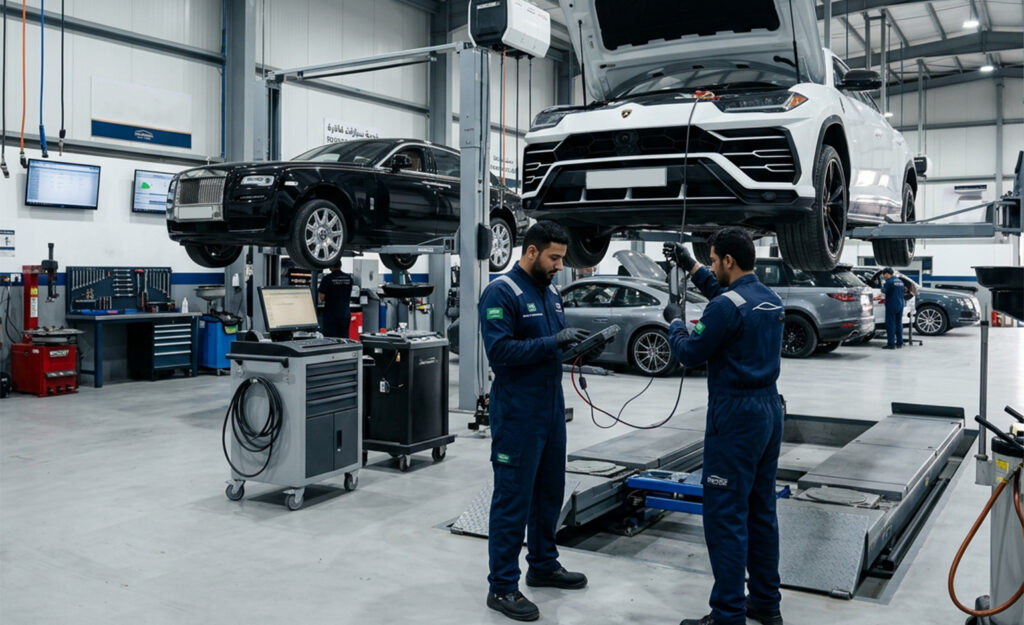
The immediate effect is most likely to be felt by importers, authorised distributors and customers waiting for vehicles that have not yet entered Saudi Arabia.
Prospective buyers should take several practical steps:
- Confirm that the exact vehicle is already in Saudi stock. A showroom display, online listing or booking form does not necessarily prove that an unregistered vehicle has completed customs and conformity procedures. Ask the seller whether the chassis has entered the Kingdom and is available for registration.
- Request a written delivery position before paying a large deposit. The agreement should explain what happens if regulatory clearance delays the vehicle. Buyers should also check whether a deposit is refundable when the promised delivery date cannot be met.
- Separate import restrictions from aftersales support. Existing owners should ask their authorised distributor whether parts supply, warranty repairs and scheduled servicing remain available. The SASO announcement did not state that current warranties or service operations had been suspended.
Why the decision matters beyond Saudi Arabia
Saudi Arabia is one of the GCC’s most influential automotive markets, and its regulatory decisions can affect regional product planning. Manufacturers often coordinate Gulf specifications, production allocations and launch schedules across Saudi Arabia, the UAE, Kuwait, Qatar, Bahrain and Oman.
The decision does not create an automatic ban in other GCC countries. UAE buyers, for example, remain subject to UAE import, conformity and registration requirements. However, a manufacturer facing delays in Saudi Arabia may reconsider regional supply volumes or accelerate the introduction of more fuel-efficient powertrains.
For Gulf distributors, the message is clear:
- Regulatory planning now matters as much as product demand. A manufacturer may have competitive vehicles and customer interest but still face disruption if required fleet documentation is submitted late.
- Efficient powertrains are becoming more important across regional line-ups. Hybrids, plug-in hybrids, electric cars and smaller turbocharged engines can help manufacturers improve their fleet-wide averages while continuing to sell larger vehicles.
- Buyers need clearer information about vehicle status. Dealers should distinguish between vehicles physically available for delivery, future allocations awaiting approval and models that have only been announced for the region.
Import clearance now becomes the key issue
Saudi Arabia’s action against the 29 manufacturers is a compliance measure linked to missing 2026 supply plans, not a permanent rejection of every affected brand or model.
The restriction may be resolved quickly for manufacturers that complete their submissions, while others could face longer delays. Until SASO or the relevant distributors provide further updates, Saudi buyers should verify the status of the exact vehicle they intend to purchase rather than relying on broad claims that a brand is either fully available or permanently banned.