Are EVs Really The Future Of GCC Driving, Or Do Hybrids Make More Sense?
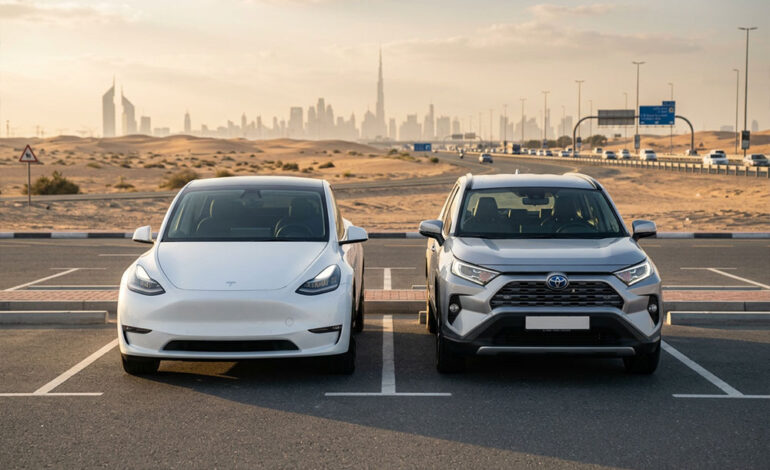
Electric vehicles are clearly part of the GCC’s long-term future, but hybrids still make more sense for many drivers right now. That is the honest middle ground in a region where Dubai and Abu Dhabi are expanding charging infrastructure, fuel is still relatively accessible, summer heat is severe, and many families use their cars for long highway journeys, school runs and cross-border trips.
The debate is not EVs versus petrol in a simple way. It is about timing, ownership habits and whether a full electric car or a hybrid fits real Gulf driving better today. The UAE has a National Electric Vehicles Policy aimed at reducing transport energy consumption by 20 per cent and improving charging convenience through a centralised database of charging stations, while Dubai’s DEWA EV Green Charger initiative continues to support public charging infrastructure.
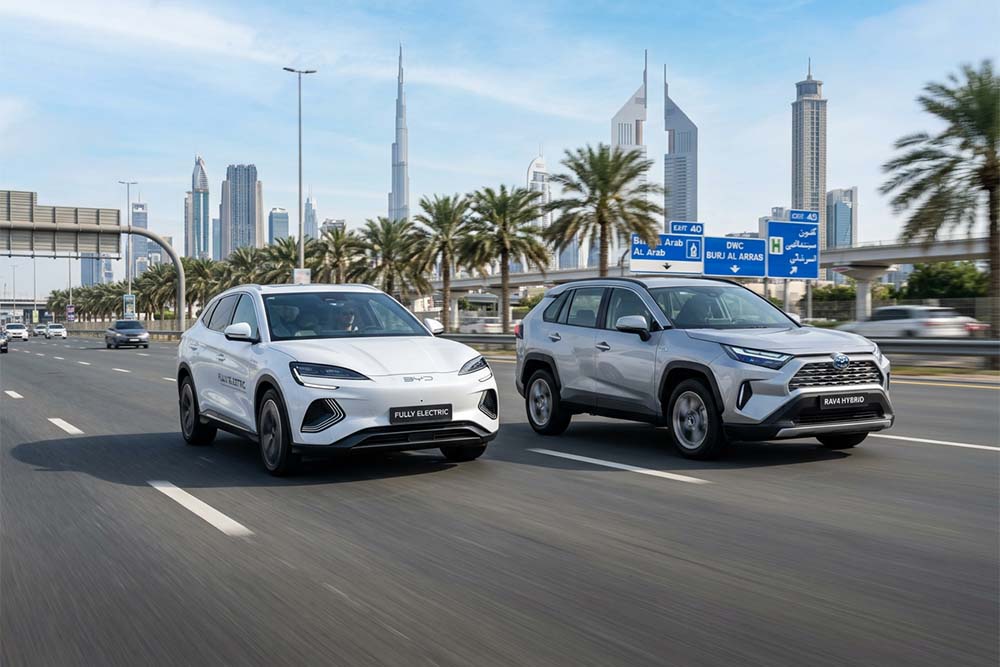
At the same time, hybrids remain widely available through mainstream dealers, with Toyota UAE listing several hybrid models across sedans, SUVs and family vehicles, including Corolla Hybrid, Camry Hybrid, RAV4 Hybrid, Highlander Hybrid and Land Cruiser Hybrid.
EVs Have The Strongest Long-Term Argument In The GCC
The case for EVs is getting stronger each year. The UAE is not treating electric mobility as a side project. It is part of wider transport, energy and sustainability planning, and that gives EVs a clearer long-term path than they had a few years ago.
Globally, EV adoption is also moving in one direction. The International Energy Agency’s Global EV Outlook 2025 tracks the continued growth of electric mobility, including battery electric vehicles and plug-in hybrids, while noting that policy, charging infrastructure and market conditions still shape adoption differently by country.
For GCC drivers, the strongest EV argument comes down to daily use. Many UAE residents drive predictable routes between home, work, schools, malls and gyms. For those with home charging or convenient workplace charging, an EV can be easy to live with.
EVs make the most sense when the owner’s routine is predictable:
- Home charging changes the ownership experience. A driver with a villa charger or reliable building charging can start most days with enough range. That removes much of the inconvenience that worries buyers who depend only on public chargers.
- City driving suits electric power well. In Dubai, Abu Dhabi and Sharjah traffic, EVs can feel smooth, quiet and easy to manage. Stop-start driving is where electric motors feel natural, especially compared with large petrol SUVs using fuel in congestion.
- Maintenance can be simpler in some areas. EVs do not need oil changes, spark plugs or traditional exhaust system work. Owners still need tyres, brakes, cooling system checks, software updates and battery care, but the service pattern is different from a conventional petrol car.
Why Hybrids Still Make Sense For Many Gulf Buyers
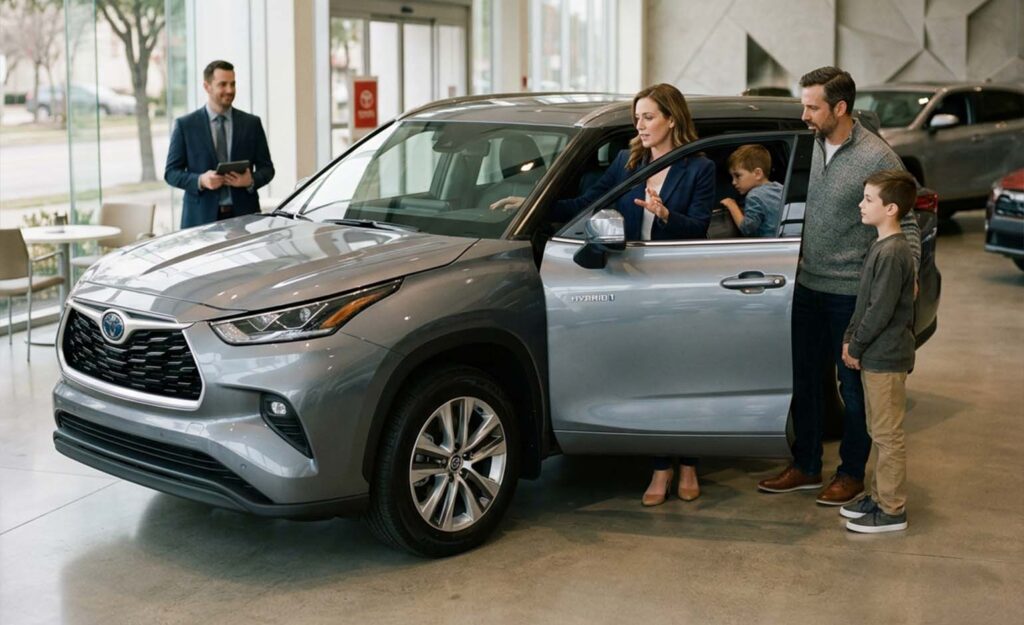
Hybrids have a strong argument because they reduce fuel use without asking buyers to change their habits too much. That is important in the GCC, where many households still want one car that can do everything, from city traffic to weekend drives, airport runs, desert-edge roads and long highway trips.
A hybrid does not require home charging. It does not need the driver to plan around public chargers. It can be refuelled like a normal petrol car, but with better efficiency in urban use, especially when traffic is heavy.
That is why hybrids appeal to practical buyers who are not against EVs, but are not ready to fully depend on charging infrastructure yet.
The hybrid advantage in everyday UAE traffic
Dubai and Abu Dhabi traffic rewards efficiency at low speeds. A hybrid system can switch between petrol and electric assistance depending on conditions, which helps reduce fuel use during slow commutes and repeated stop-start driving.
This is why hybrid sedans and SUVs make sense for families, commuters, taxis and fleet users. They offer improved economy without requiring a major change in ownership behaviour.
Long-distance driving still favours flexibility
The GCC is built around big distances. A driver may do Dubai to Abu Dhabi, Abu Dhabi to Al Ain, Dubai to Fujairah, Riyadh to Dammam or UAE to Oman without wanting to think carefully about charger availability, speed or waiting time.
For these drivers, a hybrid keeps things simple. It offers some efficiency benefit while retaining the familiar convenience of petrol refuelling.
Dealer familiarity matters
Toyota’s strong hybrid range in the UAE shows why hybrids feel safe to many buyers. Models such as the Corolla Hybrid, Camry Hybrid, RAV4 Hybrid, Highlander Hybrid and Land Cruiser Hybrid are sold through an established dealer network, which matters for servicing, warranty support and resale confidence.
For conservative buyers, that familiarity is not a small point. It can make the difference between trying electrification and waiting several more years.
Where GCC Conditions Make The Debate Different
The Gulf is not Europe, Japan or California. Local conditions shape the EV versus hybrid decision in ways that global talking points often miss.
Heat is the first issue. Battery management systems in modern EVs are designed to handle hot weather, but summer temperatures still affect energy use because air conditioning demand is high. Petrol and hybrid cars also work harder in heat, especially cooling systems, tyres and batteries, but EV buyers are often more sensitive to range loss because charging takes longer than refuelling.
Dust is another factor. Fine dust, construction zones and desert roads affect filters, cooling systems, brakes, sensors and exterior components across all vehicle types. EVs are not immune to Gulf conditions, and neither are hybrids.
The local ownership picture includes several practical questions:
- Charging access is uneven. Drivers in villas or modern towers with dedicated charging have a clear advantage. Apartment residents without assigned charging still face a more difficult ownership decision.
- Highway use can reduce EV range faster. Long, steady-speed driving with heavy air conditioning can use more energy than relaxed city driving. That matters for drivers who regularly cover intercity routes.
- Tyres and insurance deserve attention. EVs are often heavy and can wear tyres faster if driven hard. Insurance costs also vary by model, parts availability and repair complexity, so buyers should compare quotes before committing.
The EV Case Is Strongest For These Buyers
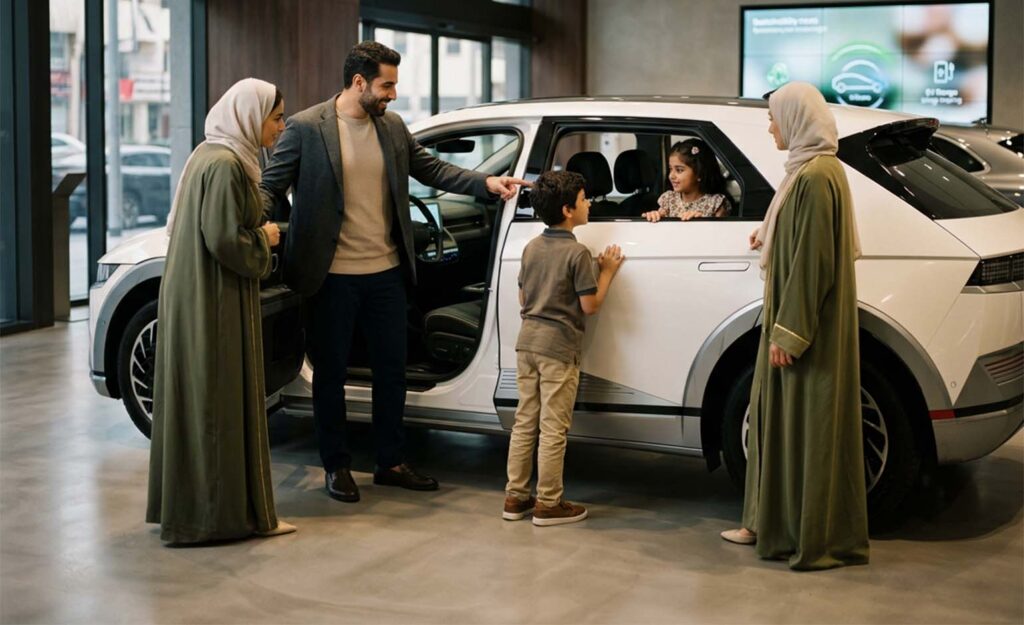
EVs are not only for early adopters anymore, but they still suit some GCC buyers better than others. The right buyer is someone who can charge conveniently, understands range needs and is comfortable with newer ownership patterns.
EVs make most sense for:
- Urban drivers with home or workplace charging. These buyers can avoid depending on public chargers for daily use. For them, the EV ownership experience can feel easier than visiting petrol stations.
- Tech-focused buyers who value quiet performance. Many EVs offer strong acceleration, smooth power delivery and a modern cabin experience. That appeals to drivers moving from premium sedans, crossovers or performance SUVs.
- Second-car households. A family that already owns a petrol SUV or hybrid may find an EV ideal for school runs, commuting and city use. This reduces the pressure on the EV to handle every possible trip.
The Hybrid Case Is Strongest For These Buyers
Hybrids remain the safer middle ground for many GCC households. They offer measurable efficiency gains without forcing the owner to plan around charging.
Hybrids make most sense for:
- Single-car families. If one vehicle must handle daily commuting, weekend trips, airport runs and occasional long-distance journeys, a hybrid is easier to recommend. It gives better fuel use than many petrol-only cars without range anxiety.
- Drivers without reliable charging access. Apartment residents, renters and people who regularly park in different locations may find EV ownership inconvenient. A hybrid avoids that issue completely.
- High-mileage users and fleets. Delivery operators, company drivers, taxis and sales staff often need predictable uptime. A hybrid can reduce fuel use while keeping refuelling quick and familiar.
Resale Value And Warranty Are Still Part Of The Decision
EV buyers in the GCC need to think carefully about resale value, battery warranty, dealer support and used-market confidence. Some EV brands have strong regional backing, while others are still building service networks. That difference matters when the car is three to five years old.
Hybrids have a more established resale story, especially from brands with long local histories. Toyota hybrids, for example, benefit from the brand’s broad UAE presence and familiar service network. That does not automatically make every hybrid a better buy, but it helps reduce buyer hesitation.
For both EVs and hybrids, owners should check:
- Battery warranty terms clearly. Do not rely on general claims. Ask what is covered, for how long, what usage conditions apply and whether the warranty transfers to the next owner.
- Service network depth. A showroom is not enough. Buyers should know where the vehicle will be serviced, how quickly parts can arrive and whether technicians are trained on that powertrain.
- Used-market demand. Popular models with clear service history usually feel safer at resale. Rare or unsupported models may be harder to value later, even if they are impressive when new.
What Makes More Sense In The UAE Right Now?
For Dubai and Abu Dhabi drivers with easy charging access, EVs are becoming more convincing. The infrastructure direction is clear, the policy support is visible, and the driving experience fits urban use well. For these buyers, an EV can already be a practical daily car.
For many wider GCC drivers, hybrids remain the more flexible choice. They handle heat, traffic, long roads and mixed driving without requiring new habits. They also suit buyers who want lower fuel use but are not ready to depend on charging.
The smartest choice depends less on the technology and more on the owner’s routine.
A buyer should ask:
- Can I charge where I actually park? Public charging is useful, but convenient home or workplace charging makes the biggest difference. Without it, EV ownership can become harder than expected.
- Do I regularly drive long distances? If long highway runs are common, a hybrid may feel easier. If most driving is within one city, an EV becomes more attractive.
- Is this my only car? A single-car household needs maximum flexibility. A second car can take more risks with newer technology and shorter daily range needs.
The Balanced Verdict
EVs look like the future of GCC driving, but hybrids make more sense for a large share of buyers today. That is not a contradiction. It reflects where the region is in its transition.
The UAE is building the policy and charging foundation for wider EV adoption, and the long-term direction is hard to ignore. Drivers with reliable charging, short daily routes and a taste for technology should take EVs seriously now.
Hybrids, however, remain the practical choice for families, high-mileage drivers, apartment residents and anyone who wants better efficiency without changing how they use a car. In GCC conditions, that flexibility still counts for a lot.