EVs Or Hybrids, Which Makes More Sense For UAE Drivers In 2026?
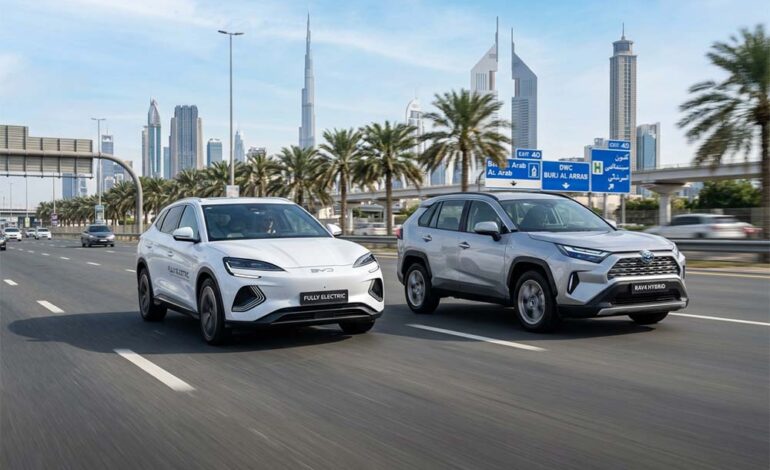
Electric vehicles and hybrid cars have both moved well beyond being niche choices in the UAE. Buyers today have access to a growing range of electric SUVs, luxury saloons, family hybrids and plug-in hybrid models from established brands and newer manufacturers alike. At the same time, charging infrastructure continues to expand, while monthly fuel price changes keep running costs firmly in the spotlight.
So, which makes more sense for UAE drivers in 2026?
The answer depends less on the technology itself and more on how you use your car. For drivers with reliable access to charging and predictable daily journeys, an EV can be an excellent choice. For those who regularly travel long distances, cannot charge at home or simply want maximum flexibility, a hybrid still offers compelling advantages.
Rather than declaring one clear winner, it is worth looking at where each technology performs best and why the debate remains particularly relevant in the UAE and across the GCC.
Why electric vehicles are winning over more UAE drivers
Electric cars have become far easier to own than they were only a few years ago. More manufacturers now offer EVs across different price ranges, while the UAE continues investing in charging infrastructure as part of its long-term transport and sustainability strategy.
For many motorists, especially those living in villas or residential developments with dedicated parking, charging at home has become one of the biggest attractions.
Everyday commuting suits electric driving
Most drivers in Dubai, Abu Dhabi and Sharjah spend the majority of their time commuting between work, school, shopping centres and home. These journeys are often well within the range offered by modern electric vehicles.
Drivers who are most likely to benefit include:
- Daily commuters in major cities. Charging overnight means the vehicle is ready every morning without regular visits to a petrol station. For many owners, this quickly becomes one of the biggest conveniences of EV ownership.
- Business users with workplace charging. Companies that provide charging facilities can make electric vehicle ownership even more practical for employees and fleet operators.
- Luxury buyers seeking the latest technology. Premium electric vehicles now offer impressive performance, advanced driver assistance systems and connected features alongside increasingly competitive driving ranges.
Lower day-to-day running costs can make a difference
Drivers covering high annual mileage often find that home charging costs less than buying petrol every week, although actual savings depend on electricity tariffs, charging habits and driving style.
Those who rely mainly on public fast chargers may see different running costs, making it important to consider where most charging will take place before buying.
Charging infrastructure continues to improve
The UAE Government has introduced policies aimed at accelerating electric vehicle adoption, while charging providers continue expanding public charging networks across the country.
Although charging availability still varies between locations, the overall ownership experience is improving each year.
Why hybrids continue to appeal to practical buyers
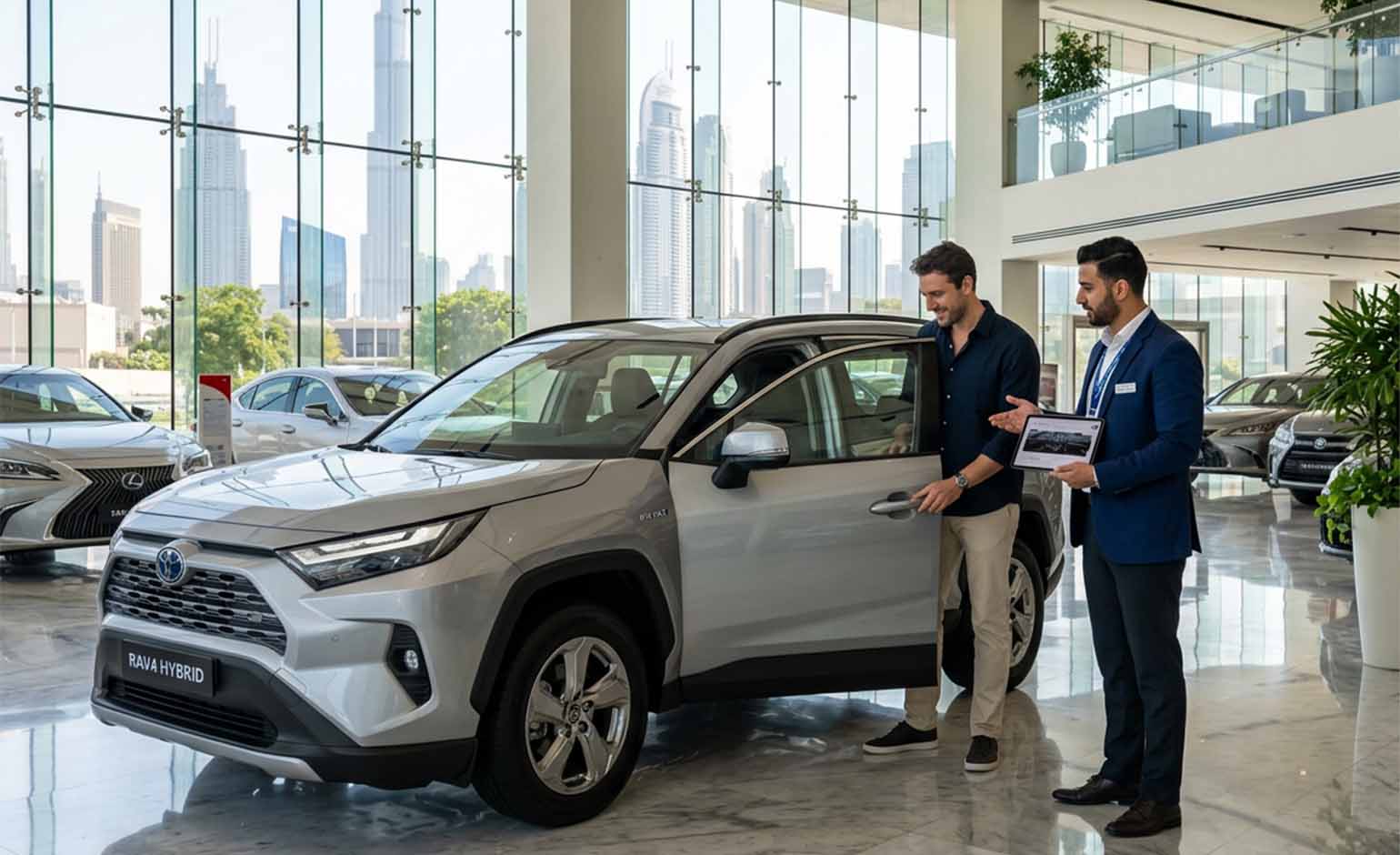
Despite the growing popularity of electric vehicles, hybrids remain one of the safest choices for many UAE households.
A hybrid combines a petrol engine with an electric motor, improving fuel efficiency without requiring drivers to plug in the vehicle. That familiar ownership experience continues to attract buyers who want lower fuel consumption without changing their routine.
Long-distance travel remains effortless
Many residents regularly drive between Dubai and Abu Dhabi, visit the Northern Emirates or travel into neighbouring GCC countries.
For these journeys, stopping for petrol remains simple and familiar.
Hybrids are particularly suited to:
- Families making frequent inter-emirate journeys. Improved fuel economy helps reduce running costs while retaining the convenience of quick refuelling anywhere in the country.
- Drivers travelling across the GCC. Petrol stations remain widely available, removing concerns about charging availability during longer trips.
- Apartment residents without dedicated charging. Buyers who cannot install home charging may find hybrid ownership considerably more straightforward.
Plug-in hybrids offer a compromise
Plug-in hybrid electric vehicles, commonly known as PHEVs, are becoming increasingly popular because they combine electric driving for shorter trips with the reassurance of a petrol engine for longer journeys.
For buyers who are interested in electrification but remain uncertain about relying entirely on charging infrastructure, this middle ground is becoming increasingly attractive.
Where this debate changes under UAE and GCC conditions
The Gulf presents unique driving conditions that influence vehicle ownership in ways many overseas markets do not experience.
Heat affects every vehicle differently
Summer temperatures regularly exceed 45°C in parts of the UAE.
Modern electric vehicles use sophisticated battery cooling systems to help manage these conditions, while petrol and hybrid vehicles depend heavily on efficient engine cooling systems.
Neither technology is immune to extreme heat, making regular maintenance important regardless of which powertrain you choose.
Desert driving still favours flexibility
Weekend trips into the desert remain popular throughout the UAE.
Drivers travelling well away from established roads often appreciate the reassurance of conventional refuelling, especially where charging infrastructure does not exist.
That does not mean EVs cannot handle light off-road use, but remote desert driving requires additional planning.
Fuel prices continue changing every month
Petrol prices in the UAE are reviewed monthly.
Although recent price reductions have benefited motorists, future fuel costs remain unpredictable. Buyers considering long-term ownership should therefore evaluate running costs over several years rather than focusing solely on current prices.
The ownership costs buyers should not ignore
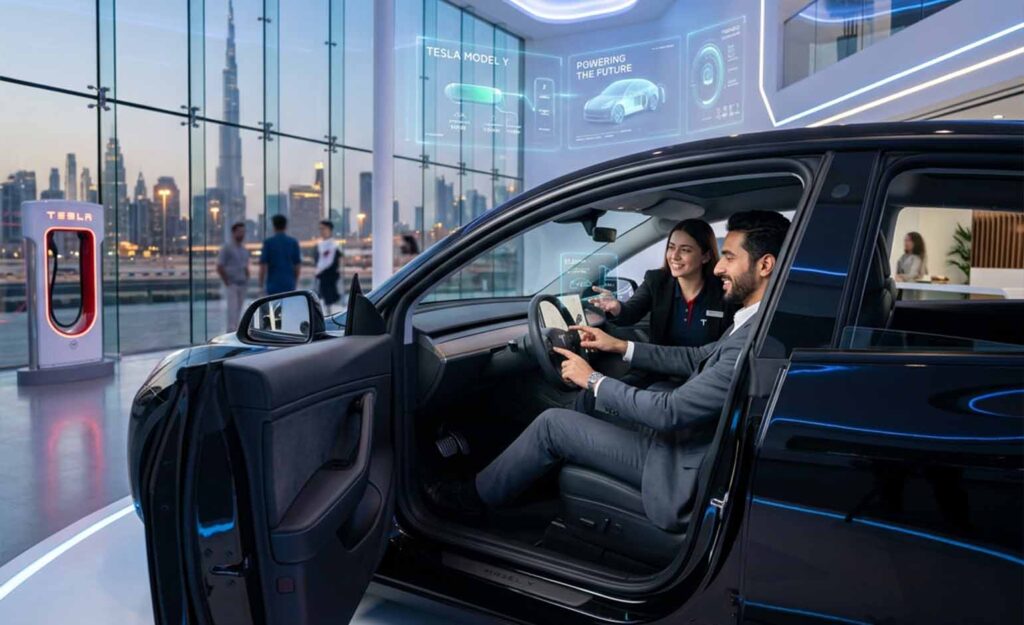
The purchase price is only one part of owning a vehicle.
Insurance, servicing, warranty support and repair availability all influence the total cost of ownership.
Insurance differences
Insurance premiums vary according to vehicle value, repair costs, driver history and insurer policies.
Some electric vehicles may attract different insurance pricing because of battery repair complexity or specialist repair requirements, although this depends on the individual model and insurer.
Dealer support matters just as much
Before choosing either technology, buyers should investigate the local support network.
Consider the following:
- Authorised service centres. A strong dealer network can make servicing, software updates and warranty repairs much easier throughout the ownership period.
- Parts availability. Newer manufacturers may still be expanding their supply chains, making it worthwhile checking expected repair times before purchasing.
- Battery warranty coverage. Warranty terms vary between brands. Buyers should understand battery coverage, capacity guarantees and any exclusions before making a decision.
Could resale value influence the decision?
Resale value remains one of the biggest unknowns for both technologies.
Traditional hybrids have been on the market for many years and have established reputations in the used car market.
Electric vehicles continue evolving rapidly, with battery technology, charging speeds and model availability improving each year. As more used EVs enter the market, resale trends are also likely to continue changing.
Rather than assuming one technology will always hold its value better, buyers should research the specific model they intend to purchase.
Which type of buyer should choose an EV?
No single answer applies to everyone.
However, an electric vehicle is likely to suit you if:
- You have reliable home charging. Charging overnight allows you to begin each day with a full battery while reducing reliance on public charging stations.
- Most of your journeys are local. Daily commuting within Dubai, Abu Dhabi or Sharjah is well suited to modern EV driving ranges.
- You enjoy the latest technology. Many electric vehicles offer advanced software, connected features and regular over-the-air updates that appeal to technology-focused buyers.
When a hybrid remains the smarter purchase
A hybrid may still be the better option if your driving habits demand maximum flexibility.
Consider a hybrid if:
- You regularly drive long distances. Frequent trips across the UAE or wider GCC are easier without planning charging stops.
- You cannot charge at home. Apartment living without dedicated charging can make hybrid ownership far more convenient.
- You prefer familiar ownership. Conventional refuelling, widespread servicing knowledge and established dealer support continue making hybrids an attractive long-term choice.
What UAE drivers should take from this debate
Choosing between an EV and a hybrid in 2026 is no longer about deciding which technology is better overall.
Instead, it is about matching the vehicle to your lifestyle.
Electric vehicles make increasing sense for urban commuters, technology enthusiasts and buyers with convenient charging access. Hybrids continue offering outstanding practicality for families, frequent travellers and drivers who want improved efficiency without changing established habits.
As charging infrastructure expands and new models continue arriving in the UAE, the balance may shift further towards electric vehicles. For now, however, both technologies have clear strengths, and neither should be dismissed.
The smartest purchase is the one that fits how you actually drive, where you travel and how you plan to own your vehicle over the coming years.